Emergency Pipe Repairs During Texas Heat Waves: Your Survival Guide for 2026’s Brutal Summers
Reading time: 12 minutes
It starts innocuously enough. A slow drip under the kitchen sink. A water pressure drop you dismiss as a fluke. Then, on the hottest afternoon of the year—when the thermometer outside your Dallas home reads 112°F and your AC is already working overtime—you hear the unmistakable sound of rushing water where it absolutely should not be rushing.
Welcome to emergency pipe repair season in Texas. And in 2026, with the state having already logged its third consecutive record-breaking summer, knowing how to respond quickly and correctly isn’t just convenient—it’s essential for protecting your home, your family, and your wallet.
Here’s the straight talk: most Texas homeowners aren’t prepared for heat-related pipe emergencies. They understand winter freeze bursts (or they learned the hard way during the catastrophic failures of recent years), but the summer threat is underestimated, misunderstood, and frequently ignored until it becomes catastrophic. This guide changes that.
Table of Contents
- Why Texas Heat Destroys Pipes (The Science You Need to Know)
- Warning Signs You Should Never Ignore
- Immediate Response Steps When a Pipe Fails
- DIY Repairs vs. Calling a Professional: Making the Right Call
- Cost Comparison: Emergency vs. Preventive Repairs
- Real Texas Stories: Lessons from the Field
- Heat-Proofing Your Pipes Before Crisis Hits
- Frequently Asked Questions
- Your Emergency-Ready Roadmap: Next Steps
Why Texas Heat Destroys Pipes (The Science You Need to Know)
Most homeowners associate pipe damage with freezing temperatures, but heat is a relentless, underappreciated adversary. In Texas’s summer of 2026, where cities like Austin, San Antonio, and Houston have recorded sustained temperatures above 105°F for weeks at a time, the physical stress on residential plumbing systems is extraordinary.
Thermal Expansion: The Hidden Culprit
Here’s a physics lesson that could save you thousands of dollars: all materials expand when heated. Copper pipes—the standard in most Texas homes built before 2000—expand at a rate of approximately 0.0000094 inches per inch per degree Fahrenheit. That sounds negligible until you realize a 50-foot copper pipe exposed to a temperature swing of 80°F (which is entirely normal in a Texas attic during summer) will expand nearly half an inch. Do that cycle repeatedly, every single day, for weeks, and you’ve got metal fatigue, joint stress, and eventually, failure.
PVC and CPVC pipes face a different challenge. At temperatures above 140°F—regularly achieved in Texas attics during summer 2026—these materials begin to soften, warp, and lose structural integrity. The Texas State Energy Conservation Office reported in early 2026 that attic temperatures in poorly insulated homes in the Dallas-Fort Worth Metroplex were averaging 155°F during afternoon peak hours. That’s not an environment PVC was designed to survive indefinitely.
Ground Movement and Soil Contraction
Texas soil—particularly the expansive clay-heavy earth prevalent across Central and North Texas—behaves dramatically under extreme heat. During prolonged droughts, this soil contracts and pulls away from foundations and underground pipes. The Texas Water Development Board estimated in 2025 that approximately 38% of reported main line breaks in residential areas were directly attributable to extreme soil movement during heat-drought events rather than pipe age alone.
Underground pipes that have been snug in stable soil for decades suddenly have gaps around them. Pressure changes. Joints shift. And on a Tuesday afternoon when you’re trying to stay cool, you find out the hard way that your front yard has become a geyser.
Water Pressure Stress
Municipal water systems throughout Texas struggle during heat waves. Demand spikes dramatically as residents water lawns, fill pools, and run cooling systems. According to data from the San Antonio Water System released in March 2026, peak summer demand in 2025 was 47% higher than the daily average—and that pressure irregularity translates directly into stress on the pipes feeding your home. Pressure surges can exploit any existing weakness in joints or corroded sections, turning a small vulnerability into a full emergency.
Warning Signs You Should Never Ignore
Catching a pipe problem before it becomes a catastrophe is the single most valuable skill a Texas homeowner can develop. The warning signs are often subtle, but they’re there if you know what to look for.
- Unexplained water pressure drops — Especially if they occur suddenly on hot days, this can indicate a leak has already started in your main line or interior pipes.
- Discolored or rusty water — Pipe degradation accelerates under heat stress. If your tap water runs brown or orange, your pipes are telling you something important.
- Warm spots on floors or walls — A hot water line failure inside a wall or under a slab will manifest as an unusually warm area on the surface above it.
- Visible pipe sweating or corrosion — Any pipe you can visually access (under sinks, in the garage, in the utility room) should be inspected monthly during summer.
- Unexpectedly high water bills — The City of Houston’s water utility noted in 2026 that a 15% or more increase in monthly water usage during summer months frequently correlates with an undetected slow leak rather than usage habits.
- Sounds of running water when nothing is on — Trust this instinct. The sound of water moving through pipes when all fixtures are closed is almost always a leak.
- Wet or unusually green patches in your yard — During a Texas drought, if one section of your lawn looks lush while everything else is browning, you likely have an underground leak beneath it.
Pro Tip: Set a monthly calendar reminder to do a 10-minute visual inspection of all accessible plumbing in your home. Pair it with reading your water meter before and after a two-hour period when no water is being used. Any movement on the meter means you have a leak somewhere.
Immediate Response Steps When a Pipe Fails
The first 15 minutes after a pipe failure are the most consequential. Acting methodically—not panicking—determines how much damage you sustain.
The 5-Step Emergency Protocol
- Locate and shut off your main water valve immediately. Know where this is before an emergency. In most Texas homes, it’s either near the street at the meter box or where the main line enters the house. Shutting this off stops active flooding within seconds.
- Turn off your water heater. If you’ve shut off the water supply, you need to turn off the water heater (both gas and electric) to prevent damage to the unit. Running a water heater without water supply can cause serious mechanical failure.
- Open the lowest faucet in your home. This relieves residual pressure in the system and helps drain any remaining water away from the damaged area.
- Document everything immediately. Take photos and video of all water damage before you touch anything. Your homeowner’s insurance claim depends on this documentation. The Texas Department of Insurance reported in 2026 that claims without photographic evidence were settled at an average of 31% lower value than documented claims.
- Call a licensed plumber—but understand what you’re calling for. Be specific about symptoms when you call. “A pipe burst in my attic near the HVAC unit” gets faster, better-equipped service than “my water isn’t working right.”
Temporary Repair Options for When Help Is Hours Away
In rural Texas or during a widespread heat emergency when plumbers are backlogged for 24+ hours, you may need to manage the situation temporarily. These are not permanent solutions—they are damage-control measures.
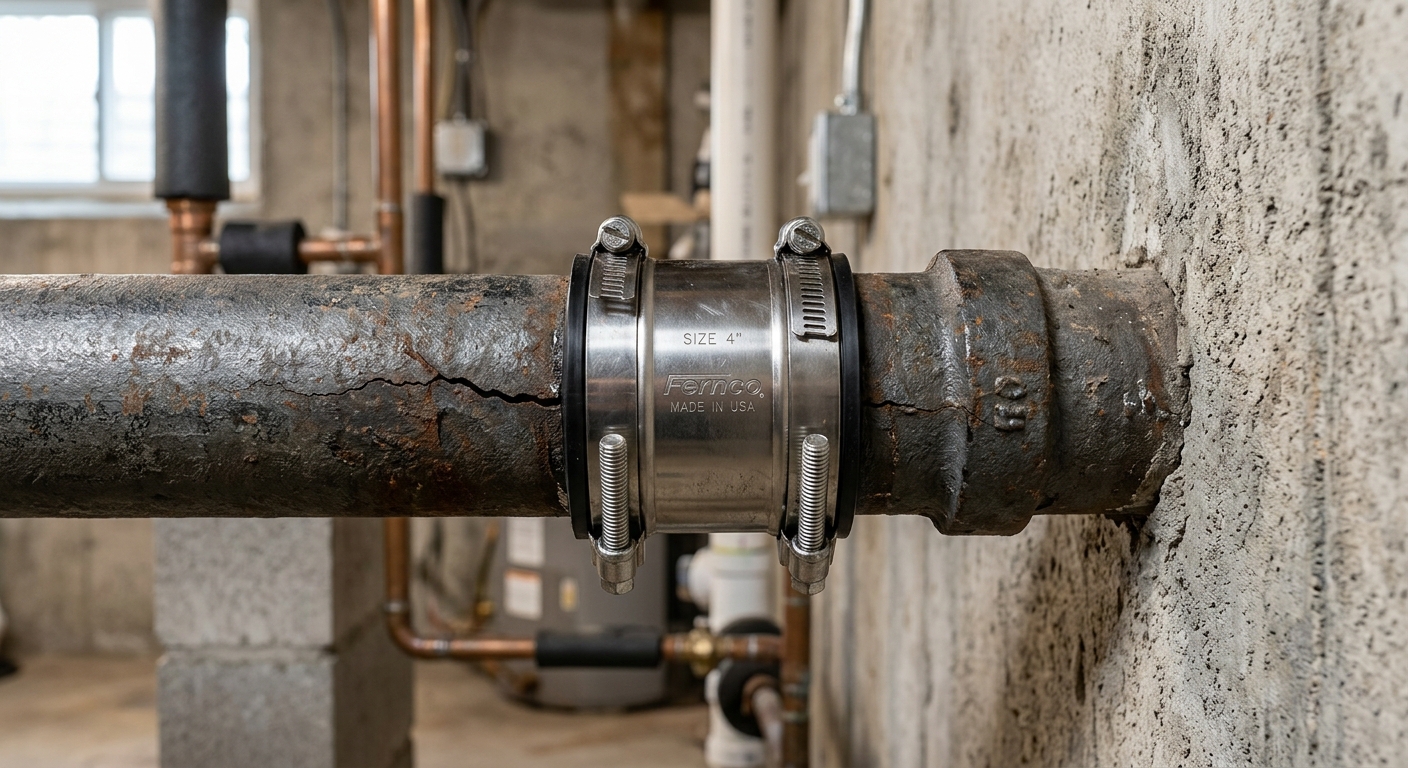
- Pipe repair clamps — Available at most hardware stores, these steel clamps with rubber gaskets can temporarily seal a crack or pinhole leak in metal or plastic pipe. They work best on straight pipe sections.
- Repair epoxy putty — Waterproof epoxy compounds can be applied to small leaks in copper, PVC, or CPVC pipes. The pipe must be dry before application. This buys you time, not a permanent fix.
- Self-fusing silicone tape — Wrap tightly around a leak, stretching the tape as you apply it. Creates a watertight seal that can hold for several days under moderate pressure.
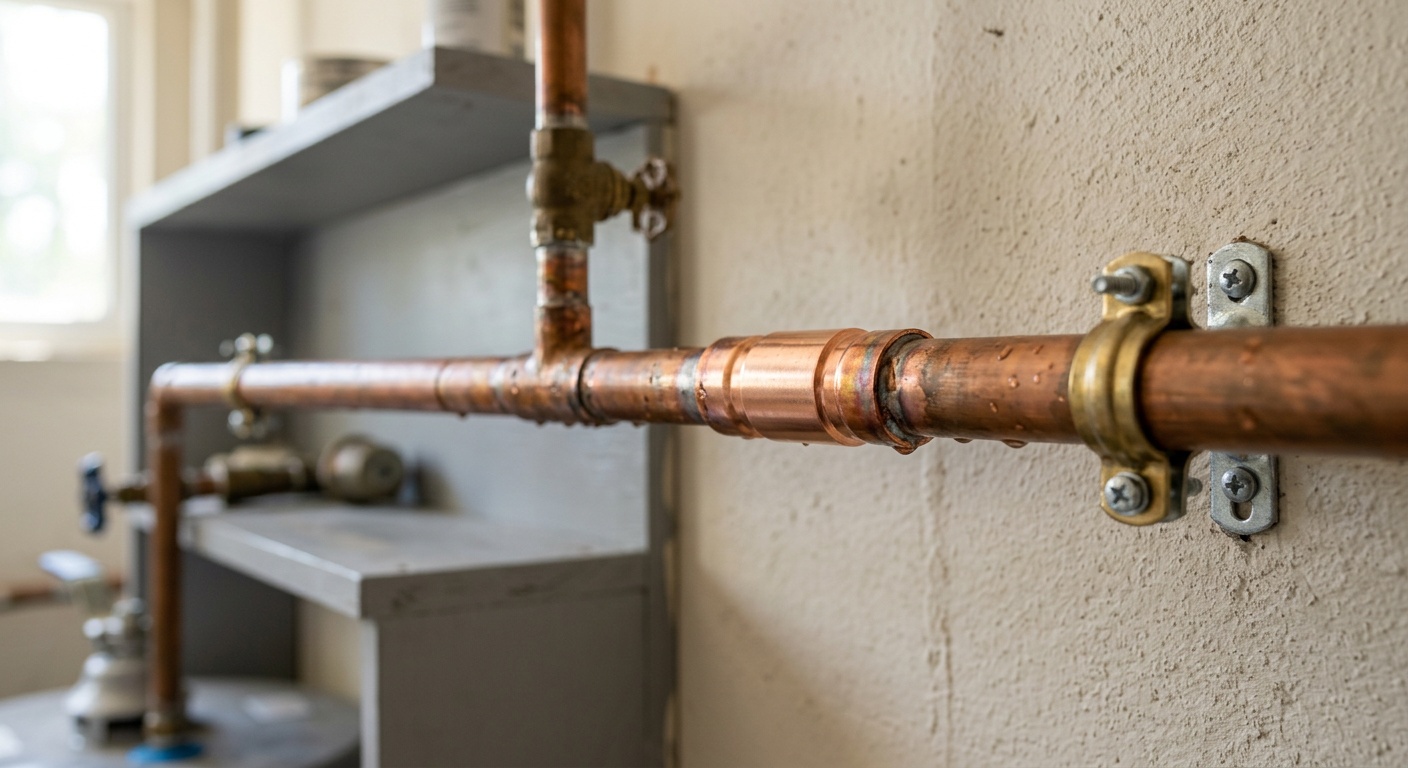
- Compression couplings — For a broken pipe section, cutting out the damaged portion and inserting a SharkBite or push-fit compression fitting requires no soldering and can restore partial service. This is the closest to a real repair you can safely DIY in an emergency.
Important caveat: Never use temporary repairs and then delay calling a professional. What holds under reduced pressure for 48 hours can fail catastrophically once full pressure is restored.
DIY Repairs vs. Calling a Professional: Making the Right Call
This is where many Texas homeowners make their most expensive mistake—either attempting complex repairs they’re not qualified to handle, or calling a professional for something straightforward and paying emergency rates unnecessarily.
Here’s a practical framework for deciding:
Safe for competent DIY: Replacing a shutoff valve under a sink, fixing a dripping faucet, replacing a toilet flapper or fill valve, applying temporary repair tape or epoxy to a small visible leak, replacing a showerhead or faucet aerator.
Call a professional: Any slab leak, any main line issue, any leak inside a wall or ceiling, any pipe replacement in an attic (heat alone makes this dangerous for non-professionals), gas line issues of any kind, and any situation where you’re not 100% certain what you’re looking at.
In 2025, the Texas State Board of Plumbing Examiners documented over 4,200 cases of homeowner DIY repairs that required professional remediation at significantly higher cost than an original professional call would have required. The average cost difference: $2,800 more in repairs due to failed DIY attempts.
The heat factor matters here too. Working in a Texas attic in July 2026 is genuinely dangerous. Heat stroke can occur within 15-20 minutes in an enclosed attic space reaching 150°F. If a pipe has failed in your attic, that is categorically professional territory—not because of the plumbing complexity, but because of the life-safety risk of working in that environment without proper training and precautions.
Cost Comparison: Emergency vs. Preventive Repairs
Repair Cost Table: Texas Market 2026
| Repair Type | Preventive Cost | Emergency Cost | Potential Damage Cost | Priority Level |
|---|---|---|---|---|
| Attic pipe insulation | $150–$400 | N/A | $8,000–$25,000 | Critical |
| Main line replacement | $1,500–$3,000 | $4,500–$9,000 | $3,000–$12,000 | High |
| Slab leak repair | $800 (detection) | $2,000–$6,000 | $10,000–$40,000 | Critical |
| Water heater pipe joint | $100–$250 | $350–$700 | $500–$3,500 | Medium |
| Irrigation main repair | $200–$500 | $600–$1,800 | $500–$4,000 | Medium |
Heat Emergency Plumbing Calls: Texas Cities 2026
Average emergency call volume increase during heat waves (vs. baseline)
Source: Texas Plumbing Contractors Association, Q2 2026 Report
Real Texas Stories: Lessons from the Field
Case Study 1: The Attic Disaster in Frisco, 2025
Marcus and Diana Chen purchased their 2002-era Frisco home in April 2025, just months before Texas’s brutal summer set in. Their home inspection noted “minor pipe insulation concerns” in the attic. They added it to their “someday” to-do list.
On August 14th, 2025—with outdoor temperatures at 109°F—a CPVC elbow joint in their attic softened and separated after weeks of thermal cycling. By the time they discovered it, water had been running into their insulation and drywall for approximately four hours. Total damage: $31,400, including drywall replacement, insulation removal, mold remediation, and plumbing repairs. Their insurance covered $19,200 after deductibles. The pipe insulation upgrade that could have prevented this would have cost $280.
“We knew something needed to be done. We just didn’t understand the urgency,” Marcus told a local news outlet after the incident. Their story went viral in North Texas plumbing and homeowner communities in late 2025 and became a cautionary reference for real estate agents conducting pre-summer home reviews in 2026.
Case Study 2: The Prepared Homeowner in San Antonio, 2026
Contrast that with Rosa Garza in San Antonio’s Stone Oak neighborhood. After reading about summer plumbing risks in early 2026, Rosa spent a Saturday in March doing a full plumbing audit with a licensed plumber she found through the Texas State Board of Plumbing Examiners’ verified contractor list. Cost: $185 for the inspection. The plumber identified two corroded joints in the garage utility line and a PVC section in the attic showing UV and heat degradation. Total repair cost to address both issues preemptively: $640.
During June 2026’s unprecedented heat event—when San Antonio saw 14 consecutive days above 107°F—Rosa had no plumbing issues. Her neighbor across the street, who declined similar advice, experienced a main line failure that cost $7,200 to repair. Rosa’s story illustrates the clearest possible return on investment in home maintenance.
Case Study 3: A Plumber’s Perspective from Houston
James Whitfield, a master plumber with 22 years of experience in the Houston metro area and owner of a mid-sized plumbing firm, shared this in a 2026 interview with Texas Contractor Monthly: “Every summer we get slammed. But 2026 has been different—we’re getting calls from homeowners who have clearly done their homework. They know where their shutoff valve is. They’ve shut off the water before they call. They’ve taken photos. They understand what they’re dealing with. These clients save themselves thousands of dollars in secondary damage. The ones who panic and don’t act? They’re the $30,000 jobs.”
Whitfield also noted that his firm now offers a “Summer Readiness Audit” for $150, which books out months in advance. He attributed growing demand directly to increased homeowner awareness following several high-profile heat emergency incidents in the Houston area during 2025.
Heat-Proofing Your Pipes Before Crisis Hits
Prevention is not complicated. It requires time, modest investment, and the discipline to act before a crisis forces your hand.
The Texas Summer Pipe Protection Checklist
- Insulate all attic plumbing. Use foam pipe insulation (minimum ½-inch wall thickness) on every accessible pipe in your attic. In Texas climates, reflective wrap over foam insulation provides additional protection.
- Identify and label your main shutoff. Do this today. Show every adult in your household where it is and how to operate it. Keep the valve exercised—a valve that hasn’t been turned in 10 years may not close fully when you need it.
- Inspect exterior hose bibs. Heat stress affects these connection points disproportionately. A cracked or loose hose bib is an easy fix that takes 20 minutes and $15 in parts.
- Check your water pressure. Install a pressure gauge on an outdoor hose bib (they cost about $12 at hardware stores). Normal residential pressure is 40–80 PSI. Readings above 80 PSI accelerate pipe joint wear dramatically. If your pressure is consistently above 80 PSI, a pressure reducing valve (PRV) installation—a $200–$400 job—will extend your entire plumbing system’s lifespan.
- Flush and inspect your water heater. Sediment buildup is exacerbated by heat and places extra stress on tank walls and connecting pipes. Flush the tank annually before summer.
- Shade outdoor pipes where possible. Any pipes running along exterior south or west-facing walls should be shaded or insulated to reduce direct solar heat gain.
- Consider a smart leak detector. Devices like the Flo by Moen or comparable systems monitor water flow 24/7 and can automatically shut off your water if anomalous flow is detected. They’ve become increasingly popular in Texas in 2026 following widespread heat-related pipe failures.
Quick Scenario: Imagine you’re going out of town for a week in August. The temperatures are forecast to be above 105°F every day. What should you do? Turn your water heater to vacation mode. Inspect all accessible pipes before you leave. Consider shutting off the main water supply if your home will be unoccupied and has a history of issues. Set a neighbor or house-sitter up with your plumber’s number and your main shutoff location. This 30-minute preparation could be the difference between coming home to a dry house and coming home to a disaster.
Frequently Asked Questions
Can heat alone cause a pipe to burst, even without any prior damage or age-related wear?
Yes, though it’s more common for heat to accelerate an existing vulnerability rather than catastrophically fail a brand-new, well-installed pipe. However, CPVC pipes—widely used in Texas homes built between 1975 and 2005—have a known susceptibility to heat-related failure, particularly in attic environments. In Texas attics reaching 150°F+, CPVC pipes can soften and fail at joints even when they are relatively new. Copper pipes are more resistant but will fail at solder joints under repeated thermal expansion stress over time. If your home has CPVC piping in unconditioned attic or garage spaces, proactive inspection and insulation are strongly recommended regardless of pipe age.
How do I find a legitimate emergency plumber in Texas during a heat wave, when demand is at its highest?
Start with the Texas State Board of Plumbing Examiners (TSBPE) online verification tool at its official website, where you can verify any plumber’s current license status. During heat emergencies, predatory pricing and unlicensed contractors are significant risks—the Texas Attorney General’s Office received over 340 consumer complaints related to emergency plumbing price gouging in summer 2025. Always get a written estimate before work begins, verify the license number independently, and be skeptical of door-to-door offers. Your city’s water utility often maintains an emergency contractor referral list as well. Establishing a relationship with a licensed plumber before an emergency—through a preventive inspection—gives you a trusted contact when crisis strikes.
Does homeowner’s insurance typically cover heat-related pipe failures in Texas?
The answer is nuanced and critically important. Most standard Texas homeowner’s insurance policies cover “sudden and accidental” water damage—meaning if a pipe fails suddenly due to heat stress and water damages your home, the resulting water damage may be covered. However, the repair of the pipe itself is generally not covered. Additionally, if an insurer can demonstrate that the failure resulted from “deferred maintenance”—meaning you knew or should have known the pipe was deteriorating and didn’t act—they may deny the claim entirely. In 2025, the Texas Department of Insurance noted that heat-related pipe claims were denied at a rate of approximately 22% due to evidence of pre-existing conditions the homeowner neglected. Document your preventive maintenance, keep receipts for inspections and repairs, and review your policy’s water damage exclusions carefully with your agent before summer arrives.
Your Emergency-Ready Roadmap: Protect Your Home Before Texas Heat Strikes Again
Here’s the reality of plumbing in 2026’s Texas: climate patterns have fundamentally changed the risk calculus for homeowners. What was once a theoretical concern about summer pipe stress is now an annual, documented, expensive problem affecting tens of thousands of households. The good news? You are now far better equipped than the vast majority of your neighbors to navigate it.
Take these concrete steps in the next 30 days:
- This week: Locate your main water shutoff and make sure everyone in your home knows where it is. Buy a water pressure gauge and check your system pressure.
- Within two weeks: Do a visual inspection of all accessible pipes—under sinks, in the garage, near the water heater, in the utility room. Note anything that looks corroded, cracked, or poorly insulated.
- Within one month: Book a plumbing inspection with a TSBPE-licensed plumber. Prioritize attic and slab pipe conditions. Address any identified issues before peak heat arrives.
- Ongoing: Monitor your water bill monthly. Any unexplained increase of 10% or more warrants investigation. Consider a smart leak detection device for continuous monitoring.
- Before any trip away from home: Run through the departure checklist: water heater to vacation mode, main line inspection, key contact information left with a trusted neighbor.
As Texas summers continue to intensify—with climate models projecting that the 2026–2030 period will see even more frequent and prolonged extreme heat events—plumbing resilience is becoming as fundamental to home ownership as having a functioning HVAC system or a solid roof. The homeowners who treat their plumbing infrastructure with the same strategic attention they give to other major systems will consistently spend less, stress less, and live more comfortably.
The question worth sitting with is this: Are you the homeowner who finds out about a problem when it’s already a catastrophe, or the one who’s already prevented three emergencies this year through smart, proactive care? The difference between those two homeowners isn’t luck—it’s preparation. And you now have everything you need to be the second one.