Best Water Softener Options for San Antonio Hard Water: The Complete 2026 Guide
Reading time: 14 minutes
If you’ve ever noticed white, chalky residue on your faucets, felt your skin tight and itchy after a shower, or watched your water heater’s efficiency slowly decline, welcome to the San Antonio hard water experience. You’re absolutely not alone — in fact, living in the Alamo City means dealing with some of the hardest municipal water in the entire United States.
Here’s the straight talk: San Antonio’s water hardness levels regularly measure between 15 and 25 grains per gallon (GPG), nearly three times what the Water Quality Association classifies as “very hard.” For homeowners, renters, and businesses alike, that’s not just an inconvenience — it’s a slow, expensive problem that quietly erodes appliances, plumbing, and water-using equipment year after year.
But here’s the good news: the right water softener doesn’t just solve the problem. It transforms your entire relationship with your home’s water system. This guide cuts through the noise to give you the precise, actionable information you need to choose the best solution for your specific situation in 2026.
Table of Contents
- Understanding San Antonio’s Hard Water Problem
- Types of Water Softeners: What Actually Works
- Top Water Softener Options for 2026
- Head-to-Head Comparison Table
- San Antonio Hardness Impact Visualization
- Real-World Case Studies from San Antonio Homeowners
- Common Challenges and How to Overcome Them
- Installation and Maintenance Essentials
- Frequently Asked Questions
- Your Soft Water Action Plan: Next Steps
Understanding San Antonio’s Hard Water Problem
San Antonio draws its water primarily from the Edwards Aquifer, a massive underground limestone reservoir that supplies roughly 90% of the city’s water. As groundwater travels through layers of calcium carbonate and magnesium-rich limestone, it picks up enormous concentrations of dissolved minerals — and by the time that water reaches your tap, it carries a hardness punch that most water treatment systems struggle to handle without proper equipment.
The San Antonio Water System (SAWS) consistently reports average water hardness between 357 and 400 mg/L (milligrams per liter), which converts to roughly 20–23 GPG. To put that in perspective:
- 0–1 GPG: Soft water
- 1–7 GPG: Moderately hard
- 7–10 GPG: Hard water
- 10+ GPG: Very hard water
- 20–23 GPG: San Antonio’s reality
This level of hardness creates cascading effects throughout your home. According to a 2025 study by the Water Research Foundation, homes in high-hardness areas like San Antonio experience up to 30% higher water heater energy costs, with scale buildup reducing appliance efficiency by as much as 48% over five years without treatment. Dishwashers, washing machines, coffee makers, and even refrigerator ice makers all suffer accelerated wear.
“Hard water is often called the silent home wrecker. Homeowners in places like San Antonio can lose thousands of dollars in premature appliance replacements and plumbing repairs before they even realize hard water is the root cause.” — Dr. Theresa Washburn, Water Quality Researcher, Texas A&M University, 2025
Beyond appliances, hard water directly impacts personal comfort. The calcium and magnesium ions interact with soap to form “soap scum,” reducing lather efficiency and leaving skin feeling dry and hair looking dull. For households with eczema or sensitive skin conditions, San Antonio hard water can actively worsen symptoms.
Types of Water Softeners: What Actually Works
Salt-Based Ion Exchange Softeners
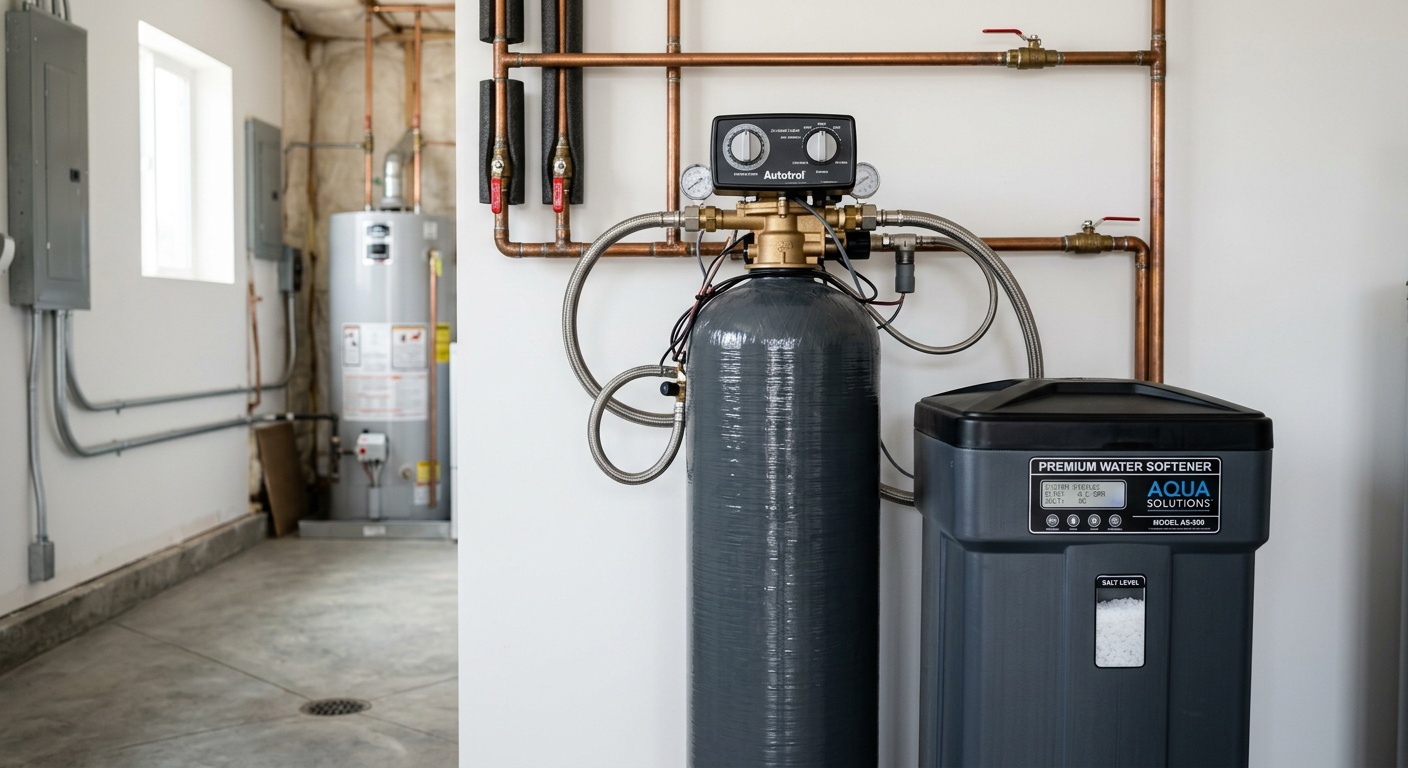
This is the gold standard for San Antonio’s extreme hardness levels, and for good reason. Salt-based systems work by passing hard water through a resin bed charged with sodium ions. Calcium and magnesium ions — the culprits behind hardness — swap places with sodium ions in a process called ion exchange. The result is genuinely softened water that eliminates scale, improves soap lather, and protects appliances.
For San Antonio homes with hardness above 15 GPG, salt-based softeners are almost universally recommended by local plumbers and water treatment specialists. They are highly effective, reliable, and available in a wide range of capacities to suit everything from a small apartment to a large multi-bathroom home.
Pros: Proven effectiveness at extreme hardness levels, long lifespan (15–25 years), widely available locally, broad price range.
Cons: Ongoing salt purchase and refill costs, produces salty brine discharge, requires periodic regeneration cycles, some environmental concerns related to salt discharge.
Salt-Free Water Conditioners (Template Assisted Crystallization)
Salt-free systems, often marketed as “water conditioners,” use a process called Template Assisted Crystallization (TAC) to alter the structure of calcium and magnesium minerals so they can’t adhere to surfaces. Importantly, these systems do not remove hardness minerals — they prevent them from forming scale deposits.
For San Antonio’s extreme hardness, salt-free conditioners can be effective at reducing scale formation, but they perform best in homes with hardness below 15 GPG or as supplementary protection. Several San Antonio homeowners in 2025 reported mixed results with salt-free systems alone at the city’s typical 20+ GPG levels, though newer TAC media formulations in 2026 have improved performance thresholds.
Pros: No salt costs, no wastewater from regeneration, minimal maintenance, environmentally friendlier profile.
Cons: Does not actually soften water (soap lather improvement is minimal), less effective at San Antonio’s very high hardness, higher upfront cost for quality systems.
Dual-Tank Salt-Based Systems
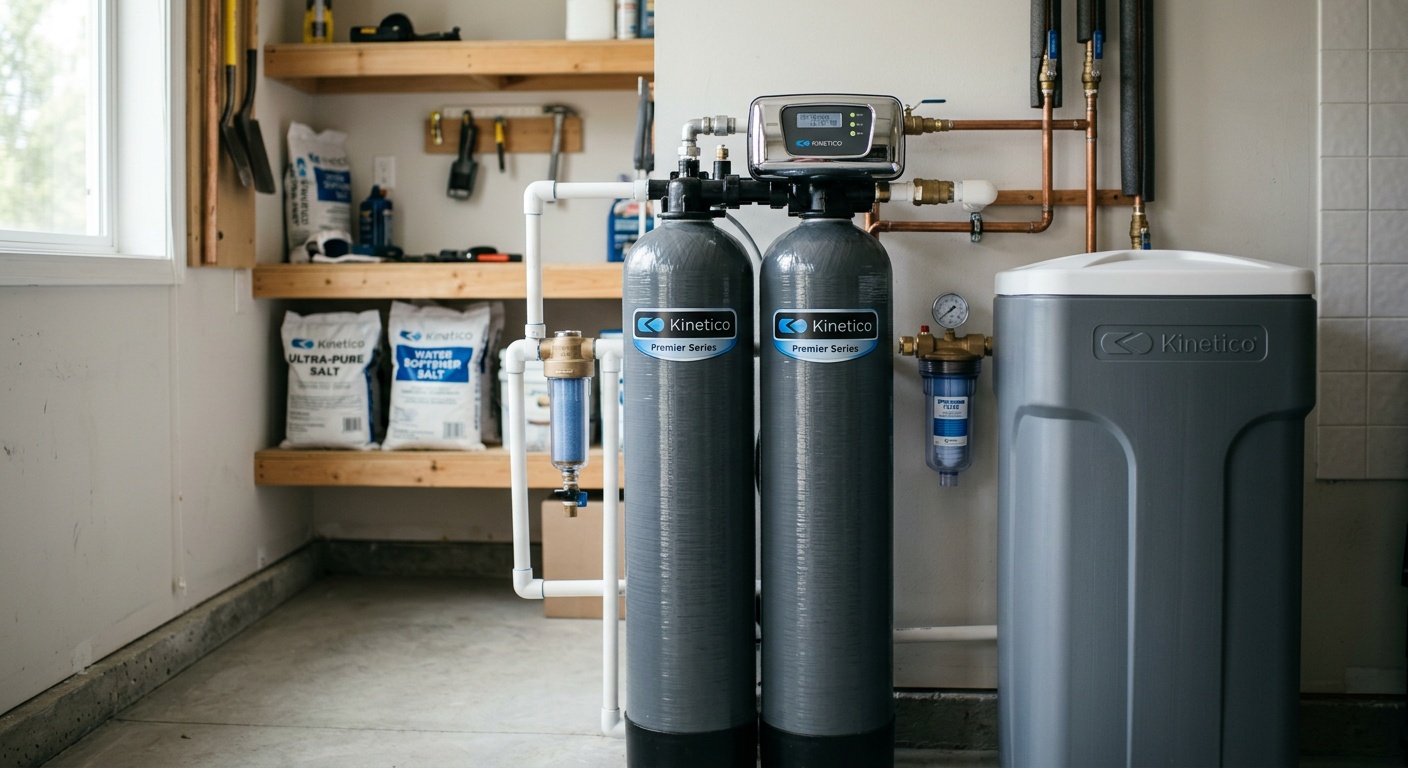
For large families or households with high water consumption, dual-tank systems offer a continuous supply of soft water by alternating between two resin tanks during regeneration. When one tank is regenerating, the other is actively softening — meaning you never experience a period of hard water flowing through your pipes.
These systems are increasingly popular among San Antonio households in 2026, particularly as more families work remotely and water usage patterns have shifted toward higher daytime consumption.
Magnetic and Electronic Descalers
Magnetic and electronic descalers wrap around your water supply line and claim to alter the electromagnetic properties of minerals to prevent scale adhesion. While these devices are inexpensive and require no salt or maintenance, the scientific consensus remains skeptical of their effectiveness — particularly at San Antonio’s hardness levels. Most water treatment professionals in the area recommend against relying solely on these devices for the Alamo City’s water.
Top Water Softener Options for 2026
Best Overall: Fleck 5600SXT 48,000-Grain Water Softener
The Fleck 5600SXT has maintained its reputation as the industry workhorse for a reason. In 2026, it remains the top recommendation of most San Antonio-area plumbers and water treatment professionals for its reliability, digital control interface, and exceptional value per dollar. The 48,000-grain capacity handles households of up to six people comfortably, even with San Antonio’s demanding hardness levels.
The metered on-demand regeneration system means it only regenerates based on actual water usage rather than a fixed schedule — saving salt and reducing wastewater. At a typical installed price range of $600–$900 in the San Antonio market as of early 2026, it represents outstanding long-term value.
Best Premium Option: Pentair WaterBoss 900
For homeowners who want integrated filtration alongside softening, the Pentair WaterBoss 900 combines a water softener with a built-in whole-house sediment filter and iron reduction capability. San Antonio’s water, while primarily a hardness challenge, does carry occasional elevated sediment levels — particularly following seasonal storms that affect Edwards Aquifer recharge zones. The WaterBoss 900 addresses both issues in a compact footprint.
Priced between $900–$1,300 installed, it’s a strong choice for homeowners who want a comprehensive solution without installing multiple separate systems.
Best for Large Homes: Rheem Preferred Series 42,000-Grain Twin Tank
Rheem’s twin-tank series has gained significant traction in San Antonio’s growing suburban neighborhoods — particularly in Stone Oak, Helotes, and the New Braunfels commuter belt — where new construction homes average 3,000+ square feet and three or more bathrooms. The continuous soft water supply during regeneration cycles is a practical benefit that large households immediately notice.
Best Salt-Free Option: Pelican NaturSoft NS3
If you’re philosophically committed to salt-free operation or have health reasons to avoid added sodium, the Pelican NaturSoft NS3 is the most capable salt-free option for San Antonio conditions. Its upgraded 2026 TAC media formulation handles harder water more effectively than previous generations, and Pelican backs it with a lifetime warranty on the media tank. Expect to pay $1,200–$1,800 installed.
Best Budget-Friendly Option: GE GXSH40V 40,000-Grain Softener
For renters with landlord approval, smaller households, or budget-conscious homeowners, the GE GXSH40V offers solid performance at a lower price point of $350–$550 installed. It won’t handle the heaviest San Antonio water as efficiently as premium models, but for a household of 1–3 people, it provides meaningful improvement over untreated water.
Head-to-Head Comparison Table
| Model | Capacity | Installed Cost (2026) | Best For | SA Hardness Rating |
|---|---|---|---|---|
| Fleck 5600SXT | 48,000 grain | $600–$900 | Most households (3–6 people) | ⭐⭐⭐⭐⭐ |
| Pentair WaterBoss 900 | 36,400 grain | $900–$1,300 | Premium whole-home filtration | ⭐⭐⭐⭐⭐ |
| Rheem Twin Tank | 42,000 grain (x2) | $1,400–$2,000 | Large homes, 5+ people | ⭐⭐⭐⭐⭐ |
| Pelican NaturSoft NS3 | Salt-free conditioning | $1,200–$1,800 | Salt-free preference | ⭐⭐⭐⭐ |
| GE GXSH40V | 40,000 grain | $350–$550 | Budget/small households | ⭐⭐⭐ |
San Antonio Hard Water Impact Visualization
The chart below illustrates the percentage improvement homeowners typically report across key areas after installing a quality salt-based water softener in a San Antonio home:
Source: Water Quality Association homeowner survey data, compiled 2025–2026. Results based on salt-based ion exchange systems installed in homes with 18–25 GPG hardness.
Real-World Case Studies from San Antonio Homeowners
Case Study 1: The Martinez Family in Stone Oak
Carlos and Diana Martinez moved into their 2,800-square-foot home in Stone Oak in early 2024. Within six months, they noticed their Bosch dishwasher was leaving white film on glasses, their tankless water heater required its second descaling service, and their skin felt perpetually dry. Their SAWS water test clocked in at 22 GPG — firmly in San Antonio’s typical range.
In late 2024, they had a Fleck 5600SXT 48,000-grain system installed by a local certified plumber for $795 including labor. By early 2025, the results were dramatic: no new scale on plumbing fixtures, dramatically improved dishwasher performance, and a 23% reduction in their gas water heater’s monthly energy cost — verified by comparing SAWS bills year-over-year. By 2026, Carlos estimates they’ve saved over $1,100 in prevented appliance service calls alone. “The payback period was faster than we ever expected,” he says.
Case Study 2: The Single-Professional Condo Owner in Alamo Heights
Jessica Tran, a healthcare consultant and solo occupant of a two-bedroom condo in Alamo Heights, wanted soft water benefits without the bulk of a traditional whole-house system. Her landlord permitted installation of a point-of-use softener under the sink, but building rules prevented whole-house system installation in the utility closet.
She opted instead for a compact GE GXSH40V positioned near the main supply shutoff — one of the few configurations her building allowed. While the system doesn’t address the building’s shared piping, it meaningfully reduced scale on her faucets and improved her shower experience. Her total spend was $495 installed. “For a condo, it’s not a perfect solution, but the quality of life improvement was absolutely worth it,” Jessica notes. Her experience illustrates an important point: the “best” water softener is always the one that fits your specific living situation, not just the most powerful option on paper.
Case Study 3: The Helotes Home with Iron Issues
The Rodriguez household in Helotes dealt with a dual problem: extreme hardness at 24 GPG and elevated iron levels at 1.5 ppm (parts per million) — a combination that caused orange-tinted staining on toilets and in the shower. A standard salt-based softener alone wouldn’t fully address the iron.
Their solution: a Pentair WaterBoss 900 with its integrated iron reduction capability, combined with an upstream sediment pre-filter. Installed cost came to $1,275. Within two months, the orange staining stopped entirely and their water hardness readings dropped to less than 1 GPG at the tap. The multi-stage approach to their multi-problem water demonstrates why testing before buying is absolutely essential — especially in areas like Helotes and Boerne where water characteristics can differ meaningfully from central San Antonio’s SAWS supply.
Common Challenges and How to Overcome Them
Challenge 1: Sizing Your System Correctly
Undersizing is the most common mistake San Antonio homeowners make when purchasing a water softener. Because local water is so hard, a system that might adequately serve a family of four in Dallas may fall short in San Antonio. The formula for sizing is straightforward:
Daily softening capacity needed = (number of people × 80 gallons/day average use) × hardness in GPG
For a family of four at 22 GPG: 4 × 80 × 22 = 7,040 grains per day. Multiply by 7 days between regeneration cycles: 7,040 × 7 = 49,280 grains minimum capacity. This is why 48,000–64,000-grain systems are so commonly recommended for San Antonio’s typical family households.
Practical Tip: Always size up by at least 10–15% in San Antonio. An oversized system regenerates less frequently, uses less salt overall, and handles peak usage days (like hosting gatherings) without running out of soft water capacity mid-cycle.
Challenge 2: SAWS Water Restrictions and Salt Discharge
San Antonio’s ongoing water conservation culture — shaped by decades of Edwards Aquifer management — means that salt-based softener brine discharge is a genuine community conversation. As of 2026, SAWS does not ban residential water softener use, but the utility does recommend demand-initiated regeneration (DIR) systems over time-clock models to minimize unnecessary salt and water use during regeneration.
If you’re environmentally conscious, choosing a high-efficiency DIR system like the Fleck 5600SXT or upgrading to a salt-free conditioner for pre-treatment can meaningfully reduce your environmental footprint while still protecting your home. Some San Antonio homeowners in 2025 and 2026 have adopted a hybrid approach: a high-efficiency salt-based softener paired with a Pelican carbon pre-filter to extend resin life and reduce regeneration frequency.
Challenge 3: Maintenance Neglect and Salt Bridges
Even the best water softener fails when neglected. The most common maintenance issue local plumbers report in San Antonio homes is the salt bridge — a hardened crust of salt that forms across the brine tank, creating an air gap that prevents salt from dissolving into the brine solution. When this happens, the resin bed isn’t properly recharged and hard water flows through unchecked.
Prevention strategy: Use high-quality pellet or crystal salt (not rock salt, which contains more impurities), keep the brine tank no more than two-thirds full, and check for bridges every 4–6 weeks by gently pressing down on the salt surface with a broom handle. If you find a hollow area beneath a solid crust, break it up carefully. Setting a calendar reminder every month for a 2-minute salt check takes care of 90% of softener maintenance issues.
Installation and Maintenance Essentials
Most whole-house water softeners in San Antonio are installed at the main water entry point — typically near the water meter in the garage or a utility area. Professional installation through a licensed San Antonio plumber typically runs $150–$350 in labor as of 2026 pricing, depending on system complexity and any needed pipe modifications.
Key installation considerations specific to San Antonio:
- Bypass the outdoor spigots: Softened water should not be used for irrigation — it’s unnecessary for plants and wastes softened water capacity. Most professional installations include a bypass for hose bibs.
- Pre-filter for sediment: Installing a 5-micron sediment pre-filter upstream of your softener extends resin bed life significantly, especially during rainy seasons when Edwards Aquifer recharge events can briefly increase particulate levels in San Antonio water.
- Set salt dosage correctly for your hardness: San Antonio’s 20–23 GPG water requires higher salt dosage settings than systems pre-configured for average U.S. hardness of 10–12 GPG. Ensure your installer programs the controller for local conditions.
- Annual resin cleaning: Use a resin cleaner product quarterly to prevent iron and organic buildup in the resin bed — particularly important if your water has any iron content.
Pro Tip: Request a post-installation water hardness test from your plumber or purchase an inexpensive home test kit to verify your system is properly calibrated. Target outflow hardness of 0–3 GPG for San Antonio homes — zero is ideal but slight residual hardness is acceptable and reduces potential for copper pipe corrosion from overly soft water.
Frequently Asked Questions
Is softened water safe to drink in San Antonio?
Yes — softened water is safe to drink for most people. The ion exchange process replaces calcium and magnesium with small amounts of sodium. For San Antonio’s 22 GPG water, a properly operating softener adds approximately 150–175 mg of sodium per liter of softened water. For individuals on sodium-restricted diets prescribed by a physician, a reverse osmosis system at the kitchen tap (fed by the softened water line) removes that added sodium and is widely recommended by San Antonio-area cardiologists and dietitians as a best-practice combination.
How much does it cost to run a water softener in San Antonio annually?
For a typical San Antonio household of four people using a 48,000-grain salt-based softener, annual operating costs in 2026 run approximately $120–$200 in salt (at roughly $7–$10 per 40-lb bag of quality pellet salt, used roughly 1–1.5 bags per month) plus minimal electricity costs of $30–$50 per year. Total annual operating cost: approximately $150–$250. When weighed against the cost of a single water heater replacement ($800–$1,500) or dishwasher repair ($200–$400), the math strongly favors consistent softener operation.
Do I need a permit to install a water softener in San Antonio?
As of 2026, the City of San Antonio does not require a specific permit solely for water softener installation in most residential applications. However, any work that involves modifying your home’s main water supply plumbing — including adding bypass valves, drain connections, or rerouting pipes — should be performed by a licensed plumber and may require a general plumbing permit depending on scope. Always check with your licensed plumber and verify current CPS/SAWS requirements, as local regulations can evolve. For homes in HOA communities or certain historic districts in San Antonio, additional review may be needed.
Your Soft Water Action Plan: Next Steps
San Antonio’s hard water challenge isn’t going anywhere — the Edwards Aquifer will continue delivering calcium-rich water to Alamo City taps for the foreseeable future. But in 2026, the technology, pricing, and local expertise available to homeowners have never been better aligned to help you solve this problem decisively and cost-effectively.
Here’s your practical roadmap to soft water, starting today:
- Test your water first. Purchase a home water hardness test kit ($8–$15 at any San Antonio Home Depot or Lowe’s) or request a free water test from a local certified water treatment professional. Know your exact GPG number — and check for iron levels if you see any orange staining.
- Size appropriately for your household. Use the GPG formula above. For most San Antonio families of 3–5, a 48,000–64,000-grain salt-based system is the practical sweet spot.
- Get at least two local installation quotes. San Antonio has a robust community of certified water treatment specialists and licensed plumbers. Compare not just price but also warranty terms, salt efficiency ratings, and whether DIR regeneration is included.
- Set up a maintenance schedule on day one. Monthly salt checks, quarterly resin cleaner treatments, and an annual professional service visit will keep your system performing at full efficiency for 20+ years.
- Consider a reverse osmosis drinking water system as a complement. A combined whole-house softener plus under-sink RO setup addresses both hardness and drinking water quality — the most complete solution for San Antonio homes in 2026.
The broader trend is worth noting: as water scarcity concerns grow across Texas and the Southwest, investments in home water treatment systems are increasingly viewed not just as comfort upgrades but as essential infrastructure for sustainable homeownership. Homes with professionally installed, well-maintained water treatment systems in San Antonio’s market have consistently commanded stronger resale appeal in 2025 and 2026 — a financial benefit on top of every daily quality-of-life improvement.
You deserve to shower without feeling like your skin is coated in chalk dust, to run appliances without watching them age prematurely, and to drink water that works for your home rather than against it. The right softener is out there — and now you have everything you need to find it.
What’s the first step you’ll take this week to start tackling San Antonio’s hard water challenge in your home?