Signs Your Water Heater Is Failing in Extreme Heat
Reading time: 12 minutes
It’s the middle of a sweltering summer in 2026, with heat waves breaking records across North America and Europe. You walk into your kitchen expecting a hot shower after a brutal day — and you’re greeted with lukewarm water, a strange gurgling noise, and a faint smell of something burning. Sound familiar?
Here’s the hard truth most homeowners don’t realize: extreme heat doesn’t just make your home uncomfortable — it silently accelerates the breakdown of your water heater. The combination of high ambient temperatures, increased household water demand, and the thermal stress placed on aging components creates the perfect storm for water heater failure.
In 2025, the U.S. Department of Energy reported that water heater failures spike by 34% during extreme heat events compared to moderate weather months. And with 2026 already logging some of the hottest consecutive days on record in states like Arizona, Texas, and California, the timing couldn’t be more critical.
This guide is your strategic roadmap — whether you’re a first-time homeowner or someone who’s dealt with a flooded basement before. Let’s decode exactly what your water heater is trying to tell you before it gives up completely.
Table of Contents
- Why Extreme Heat Accelerates Water Heater Failure
- The 7 Critical Warning Signs to Watch For
- Tank vs. Tankless: How Each Handles the Heat
- Real-World Scenarios: What Failure Actually Looks Like
- Warning Sign Frequency During Heat Waves
- Your Diagnostic Checklist
- Common Challenges and How to Overcome Them
- Frequently Asked Questions
- Your Summer Water Heater Action Plan
Why Extreme Heat Accelerates Water Heater Failure
Most people assume water heaters are immune to outside temperatures — after all, they generate their own heat. But that assumption can cost you thousands of dollars in emergency replacements and water damage repairs.
Water heaters installed in garages, attics, or utility rooms that lack proper insulation or ventilation are particularly vulnerable. In Phoenix, Arizona, garage temperatures routinely hit 120–130°F (49–54°C) during summer 2026 heat waves. When your water heater’s surrounding environment is already superheated, several dangerous processes accelerate:
- Anode rod degradation speeds up — The sacrificial anode rod that prevents tank corrosion dissolves far faster in high-temperature environments.
- Pressure fluctuations intensify — Thermal expansion inside the tank becomes more dramatic when ambient heat compounds internal heating cycles.
- Sediment buildup accelerates — Mineral deposits bake onto the tank bottom faster, insulating the heating element and forcing it to work harder.
- Electrical components become stressed — Thermostats, heating elements, and circuit boards on electric heaters all degrade faster under compounded thermal loads.
According to the Plumbing-Heating-Cooling Contractors Association (PHCC), the average water heater lifespan drops from 12–15 years to as few as 7–9 years when consistently exposed to extreme ambient temperatures without proper maintenance. That’s nearly half the expected service life — quietly disappearing because of preventable neglect.
The Thermal Compounding Effect
Think of your water heater like a marathon runner. Under normal conditions, it jogs comfortably. In extreme heat, it’s sprinting in full gear. The thermal compounding effect occurs when external ambient temperatures force the unit’s thermostat to cycle more frequently — even when your demand for hot water hasn’t changed. This continuous cycling wears out the heating elements and thermostat controls significantly faster.
A 2025 study by the Lawrence Berkeley National Laboratory found that water heaters in non-conditioned spaces (garages, attics, crawl spaces) consumed up to 22% more energy during summer heat waves and showed measurably higher component failure rates within the following 18 months.
When Does “Hot” Become Dangerous?
Here’s a practical threshold to understand: most water heaters are designed to operate in ambient temperatures between 32°F and 110°F (0°C–43°C). Once surrounding temperatures creep above that range — which is increasingly common during 2026’s prolonged heat events — you’re operating outside the designed parameters. That’s not just inefficient; it’s actively harmful to the unit’s longevity.
The 7 Critical Warning Signs to Watch For
Let’s get specific. Forget vague advice like “listen for strange noises.” Here are the precise, actionable signals your water heater sends when it’s struggling in the heat.
Sign 1: Inconsistent Water Temperature
If your shower cycles unpredictably between scalding hot and disappointingly lukewarm — even when no one else is using water in the house — your thermostat or heating element is likely failing under thermal stress. In extreme heat, thermostat sensors can give false readings, causing the heater to overshoot or undershoot its target temperature.
What to do: Test three consecutive showers at the same time of day. If temperature varies by more than 15°F, call a technician immediately.
Sign 2: Rumbling, Popping, or Cracking Sounds
That unsettling percussion coming from your utility room isn’t normal. It’s the sound of mineral sediment — primarily calcium and magnesium carbonates — that has hardened on the tank floor. When the heating element tries to push heat through this mineral crust, water trapped beneath the sediment superheats and pops violently. In extreme heat, this process accelerates because the unit runs longer and hotter cycles.
What to do: If you hear consistent rumbling during heating cycles, schedule a professional flush immediately. Ignoring this for more than 2–3 weeks during a heat wave dramatically increases rupture risk.
Sign 3: Visible Rust or Discolored Water
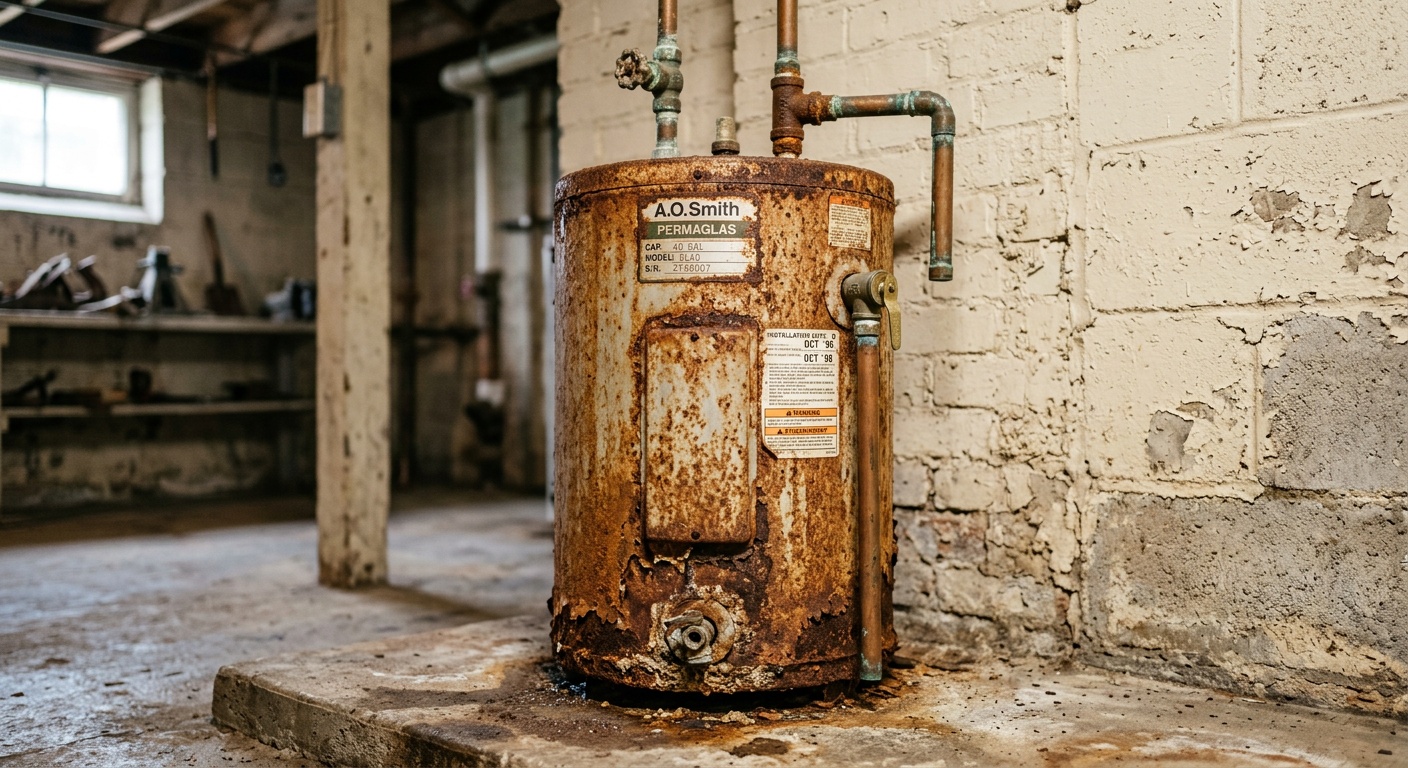
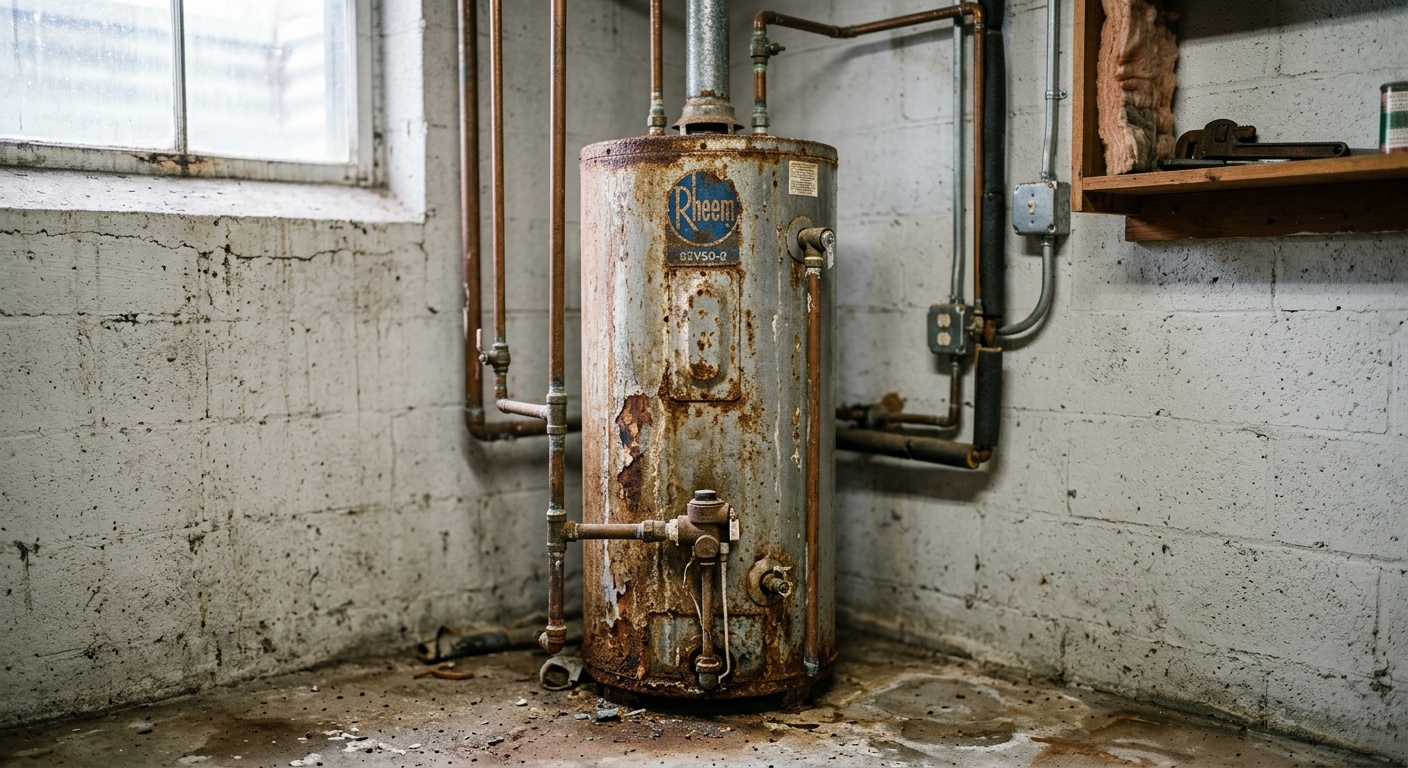
Rusty brown or reddish water coming from your hot tap is a serious red flag. This indicates the interior tank lining or the anode rod has failed, allowing active corrosion of the steel tank walls. Extreme heat accelerates electrolytic corrosion — a process where minerals in water interact with metal surfaces more aggressively at elevated temperatures.
Important distinction: Run cold water for 60 seconds. If the discoloration only appears in hot water, the problem is definitely your water heater. If both hot and cold water are discolored, the issue may be municipal supply lines.
Sign 4: The Pressure Relief Valve Is Leaking or Hissing
The Temperature and Pressure Relief (TPR) valve is your water heater’s last line of defense. If it’s dripping water, releasing steam, or making a persistent hissing sound, the internal pressure has exceeded safe limits. In extreme heat, thermal expansion pressure can exceed the 150 PSI threshold on older tanks — especially those without expansion tanks installed on closed plumbing systems.
This is an emergency situation. A weeping TPR valve that isn’t tested regularly can seize in the open position (causing water waste) or, more dangerously, fail to open when pressure becomes critical, risking a catastrophic tank explosion.
Sign 5: Dramatically Higher Energy Bills
Your utility bill tells a story your water heater won’t announce directly. If your electricity or gas bill spikes by 15–25% without a corresponding change in usage habits, your water heater may be working overtime to maintain temperature in a superheated environment. In 2026, with energy prices averaging 18% higher than 2024 levels in most U.S. markets, this is a financially painful signal you can’t afford to ignore.
Sign 6: Water Pooling Around the Base
A puddle around your water heater is never a minor cosmetic issue. During extreme heat, tanks that have developed hairline corrosion cracks can suddenly expand enough to leak — particularly at weld seams and around the heating element gaskets. Even small leaks signal imminent tank failure. A 40-gallon tank failure can release 300+ gallons before a standard float shutoff activates.
Sign 7: Age Combined with Performance Decline
If your water heater is 8 years or older and you’re experiencing any combination of the above symptoms during a heat wave, the math shifts dramatically in favor of replacement over repair. A 2026 survey by the Water Quality Association found that repair costs on heaters older than 8 years averaged 62% of the cost of a new unit — without any guarantee of extended lifespan.
Tank vs. Tankless: How Each Handles the Heat
Not all water heaters respond to extreme heat the same way. Understanding the differences can help you make smarter maintenance and replacement decisions.
| Factor | Traditional Tank Heater | Tankless (On-Demand) Heater |
|---|---|---|
| Heat Wave Vulnerability | High — ambient heat forces longer cycles | Moderate — no standby heat loss but inlet temps affect efficiency |
| Sediment Risk | Very High — sediment accumulates and bakes | Low — but scale buildup on heat exchanger still occurs |
| Pressure Relief Risk | High — thermal expansion significant in summer | Lower — no large stored volume to expand |
| Average Lifespan (Hot Climate) | 7–10 years | 15–20 years |
| Emergency Failure Risk | High — tank rupture possible | Low — unit shuts down vs. catastrophic failure |
The key takeaway here: tankless units handle extreme heat more gracefully, but they’re not immune. Their heat exchangers can scale up rapidly when groundwater temperatures rise — a phenomenon increasingly documented in southern U.S. states during the prolonged 2026 summer heat events.
Real-World Scenarios: What Failure Actually Looks Like
Case Study 1: The Dallas Garage Disaster (Summer 2025)
A homeowner in suburban Dallas noticed their 9-year-old gas water heater making occasional popping sounds starting in late June 2025. Dismissing it as “just the heat,” they delayed calling a plumber. By mid-July, during a 12-day stretch where temperatures exceeded 108°F, the tank’s corroded bottom seam failed. The resulting flood caused $18,400 in structural water damage to their finished garage and adjacent laundry room — none of which was covered by their homeowner’s insurance because the policy excluded “gradual deterioration.”
The lesson: The warning signs were present 6 weeks before failure. A $150 professional inspection and a $90 sediment flush could have extended the unit’s life by 2–3 years or triggered a planned replacement on the homeowner’s timeline.
Case Study 2: The Phoenix Efficiency Spike That Paid Off
In contrast, a homeowner in Scottsdale, Arizona, noticed her electric bill jumped $67 in June 2026 without explanation. She used an app connected to her smart home system to isolate the energy draw — and identified her 7-year-old electric water heater as the culprit, consuming 28% more electricity than its baseline average. She called a technician, who found a failing lower heating element and severe sediment buildup.
Rather than a catastrophic failure, she got a planned replacement with a hybrid heat pump water heater — qualifying for a $600 federal energy efficiency tax credit under the 2025 Inflation Reduction Act extension. Total savings compared to emergency replacement plus water damage: estimated $3,200.
The lesson: Smart monitoring and proactive response transform potential disasters into strategic upgrades.
Warning Sign Frequency During Heat Waves
Based on 2025–2026 service call data compiled by the PHCC National Service Report, here’s how frequently each warning sign appears in service calls during extreme heat events (temperatures exceeding 100°F for 5+ consecutive days):
Most Common Water Heater Failure Signs During Heat Waves (% of Service Calls)
Source: PHCC National Service Report, 2025–2026 Heat Season Data
Your Diagnostic Checklist
Use this quick checklist during — or immediately before — a predicted heat wave in your area. This takes less than 20 minutes and could save you thousands.
- Check the unit’s age — Find the serial number and decode the manufacture date (most brands encode the year in the first 2–4 digits; use the manufacturer’s website for decoding).
- Inspect the area around the base — Look for any moisture, rust stains, or white mineral deposits on the floor around the unit.
- Listen during a heating cycle — Set your hot water thermostat to trigger a heating cycle and listen for 5 minutes. Popping or rumbling is a red flag.
- Test the TPR valve carefully — With a bucket under the discharge pipe, briefly lift the valve lever. It should release a burst of water and then reseal. If it continues dripping or doesn’t open, replace it immediately.
- Run hot water and observe color — Run the hot tap for 3 minutes. Any discoloration warrants urgent attention.
- Check your thermostat setting — During extreme heat, lower your water heater thermostat to 120°F (from the common 140°F setting). This reduces thermal stress significantly.
- Inspect the anode rod — If you haven’t replaced it in 3–5 years, schedule it now. This single component is your tank’s primary defense against corrosion.
Common Challenges and How to Overcome Them
Challenge 1: “I Can’t Tell If It’s a Minor Issue or a Real Emergency”
This is the most common hesitation homeowners face. The problem is that many warning signs overlap between minor maintenance needs and genuine emergencies. Here’s a practical decision framework:
- Immediate emergency (call a plumber same day): TPR valve leaking continuously, water pooling at the base, burning smell from the unit, complete loss of hot water combined with any visible rust.
- Urgent but not emergency (schedule within 1 week): Consistent temperature fluctuations, audible rumbling during every heating cycle, energy bill spike above 20%.
- Maintenance (schedule within 30 days): Occasional minor sounds, mild discoloration that clears after running water, unit age over 8 years with no recent service.
Challenge 2: Finding Reliable Service During Peak Summer Demand
Here’s a practical reality check for 2026: HVAC and plumbing contractors are overwhelmed during heat waves. In Phoenix and Las Vegas, wait times for water heater service exceeded 5–7 days in July 2025. Planning ahead is your competitive advantage.
Strategies to secure faster service:
- Establish a relationship with a local plumber before emergencies happen — many offer priority scheduling to existing customers.
- Schedule your annual water heater inspection in April or early May — before the heat wave season floods service books.
- Know your unit’s model number and have photos of any issues ready to send digitally — this speeds up diagnosis and parts ordering.
Challenge 3: Budget Constraints Around Replacement Timing
A new water heater costs between $800 and $3,500 installed in 2026, depending on type and location. That’s not a trivial expense. But delaying replacement on a failing unit during a heat wave often costs significantly more.
Smart financial approaches:
- Check the ENERGY STAR federal tax credit — hybrid heat pump water heaters installed in 2026 qualify for a 30% tax credit up to $2,000 under current legislation.
- Many utility companies offer rebates of $50–$400 for upgrading to high-efficiency models — call yours before purchasing.
- If replacement isn’t immediately possible, a sediment flush ($75–$150) and anode rod replacement ($50–$100) can buy you meaningful additional service life while you plan.
Frequently Asked Questions
Can extreme outdoor heat cause my water heater to overheat even if it’s set at a normal temperature?
Yes, absolutely. When ambient temperatures in your utility space rise significantly — especially in garages or attics during heat waves — the thermostat reads higher baseline temperatures and the unit cycles more frequently to compensate for perceived heat loss. In some cases, combined with the unit’s own heat production, internal temperatures can exceed designed thresholds. This is why lowering your thermostat setting to 120°F during extreme heat events is strongly recommended and why proper ventilation around your unit is essential year-round.
How do I know if my water heater failure is covered by homeowner’s insurance?
Most standard homeowner’s insurance policies cover sudden and accidental water damage from water heater failure — for example, a sudden tank rupture. However, they typically exclude damage caused by “gradual deterioration,” “lack of maintenance,” or “slow leaks.” This distinction matters enormously. If your heater has been showing warning signs for weeks and you delayed action, your insurer may deny the claim. Document any issues as they appear, call a plumber promptly, and review your policy’s specific language around water damage exclusions. Some policies offer optional equipment breakdown coverage — worth adding for homes with older appliances in 2026.
Is it worth repairing a water heater that’s 10 years old, or should I just replace it?
The general industry rule of thumb is to use the “50% rule”: if the repair cost exceeds 50% of the replacement cost, replace it. For a 10-year-old unit showing heat-wave-related stress symptoms, replacement is almost always the smarter financial decision. At that age, even after a successful repair, you’re extending the life of a unit that is statistically likely to fail again within 1–3 years. A new heat pump water heater, eligible for the 2026 federal tax credit, could pay back the difference in energy savings within 4–6 years while eliminating the anxiety of imminent failure.
Your Summer Water Heater Action Plan: Don’t Wait for the Flood
You now have the knowledge most homeowners only gain after a costly failure. Here’s how to turn that knowledge into proactive protection — starting this week.
- This week: Physically locate your water heater, find the manufacture date, and run through the 7-point diagnostic checklist above. Take photos. Note anything unusual.
- Within 14 days: If your unit is 8+ years old, call a licensed plumber for a professional inspection. Ask specifically about anode rod condition, sediment levels, and TPR valve function.
- Before the next heat wave: Lower your thermostat setting to 120°F, ensure your utility space has adequate ventilation, and install a water leak detector ($25–$50 at any hardware store) near the base of the unit.
- Strategic planning: If replacement is on the horizon, research hybrid heat pump water heaters now — before emergency pressure forces a rushed decision. Compare energy efficiency ratings, available rebates, and contractor quotes in advance.
- Ongoing: Schedule annual water heater maintenance every April — before heat season. This single habit is the highest-return maintenance investment in your home’s mechanical systems.
As climate patterns in 2026 continue pushing heat wave intensity and duration to new extremes, proactive home maintenance isn’t just smart — it’s financially essential. The gap between homeowners who anticipate failures and those who react to them will only widen in the years ahead.
Here’s the question worth sitting with: If your water heater failed silently tonight while you slept, how much damage would you wake up to — and what would it cost you? The answer might be the most compelling reason to take action today.
You’re now equipped not just to recognize the warning signs, but to respond strategically. That’s the difference between a $150 maintenance call and an $18,000 insurance nightmare — and it starts with the 20 minutes you invest in that diagnostic checklist.