San Antonio Summer Plumbing Problems Every Homeowner Should Know
Reading time: 12 minutes
It’s July in San Antonio. Your AC is working overtime, the backyard thermometer reads 103°F, and suddenly — no water pressure. Or worse, a pipe bursts under your slab and water is creeping across your living room floor. Sound familiar? You’re not alone.
San Antonio summers are notoriously brutal, and the extreme heat doesn’t just affect your comfort — it wages war on your plumbing system in ways most homeowners never see coming. The combination of scorching temperatures, hard water, aging infrastructure, and drought-driven ground shifts makes the Alamo City one of the most demanding environments for residential plumbing in the entire country.
Well, here’s the straight talk: most summer plumbing disasters are preventable. The homeowners who avoid expensive emergency calls aren’t lucky — they’re prepared. This guide is your practical roadmap to understanding, anticipating, and defeating San Antonio’s most common summer plumbing problems before they destroy your weekend and drain your wallet.
Table of Contents
- Why San Antonio Summers Are Uniquely Brutal on Plumbing
- The Top Summer Plumbing Problems in San Antonio
- The Hard Water Factor: San Antonio’s Hidden Plumbing Villain
- Slab Leaks: San Antonio’s #1 Summer Emergency
- Proactive Prevention Strategies Every Homeowner Should Implement
- Summer Plumbing Problem Comparison Table
- Frequently Asked Questions
- Your Summer Plumbing Survival Roadmap
Why San Antonio Summers Are Uniquely Brutal on Plumbing
San Antonio’s climate is classified as humid subtropical, but in practice, summers feel more like a desert marathon. According to the National Weather Service, San Antonio recorded an average of 52 days above 100°F during the summer of 2025 — a trend that continues into 2026. That sustained heat doesn’t just stress your body; it fundamentally destabilizes the ground your home sits on and accelerates the wear cycle on every pipe, valve, and fixture in your system.
The Edwards Aquifer, which supplies much of San Antonio’s water, delivers groundwater with extraordinarily high mineral content. The San Antonio Water System (SAWS) consistently reports water hardness levels between 15 and 20 grains per gallon — classified as “very hard” by industry standards. This mineral-laden water accelerates pipe corrosion, clogs aerators, and dramatically shortens water heater lifespans.
Add to that the expansive clay soils that dominate the region — which shrink dramatically during drought and expand again when rain returns — and you have a ground that literally moves beneath your home every summer. For slab foundations and the pipes running through them, this ground movement is catastrophic over time.
“San Antonio is in a unique pressure zone for plumbing. The combination of extreme heat, very hard water, and Expansive clay soil movement puts stress on residential systems that homeowners in other cities simply don’t experience.” — David Torres, Licensed Master Plumber, San Antonio (2026)
The Top Summer Plumbing Problems in San Antonio
1. Spiking Water Bills Without Visible Leaks
One of the most alarming — and common — summer complaints SAWS receives involves sudden spikes in water consumption without any obvious explanation. In many cases, homeowners discover they have underground leaks running silently for weeks. During summer 2025, SAWS reported that residential water waste from undetected leaks averaged 10,000 gallons per household per year, with leaks disproportionately discovered during summer billing cycles.
The culprit is often a toilet flapper that warps in the heat, an irrigation line that cracks under ground pressure, or a supply line that finally gives out after years of mineral buildup. The tricky part? None of these are visible without deliberate inspection.
Quick diagnostic you can do right now:
- Turn off all water fixtures in the house
- Locate your water meter and note the current reading
- Wait exactly 30 minutes without using any water
- Check the meter again — if it moved, you have an active leak
2. Outdoor Hose Bibs and Irrigation System Failures
Summer in San Antonio means irrigation systems run constantly. But here’s what most homeowners miss: irrigation systems that were winterized improperly in December 2025 often have micro-cracks that only reveal themselves under the sustained high-pressure summer demand of 2026. A cracked zone valve or a split lateral line can dump hundreds of gallons daily into your soil before anyone notices the soggy patch in the lawn.
Hose bibs — those outdoor spigots — are also notorious summer casualties. The thermal expansion from ground heat and sun exposure causes the rubber washers inside to harden and fail. If your hose bib drips even when fully closed, you’re wasting water and inviting more serious valve failure.
Pro Tip: Run each irrigation zone individually at the start of summer and physically walk the zone while it’s running. Look for spray patterns that seem off, wet spots that shouldn’t be there, or pressure that seems lower than usual on one zone versus another. Five minutes of observation can save you hundreds of dollars.
3. Water Heater Stress and Sediment Buildup
Most San Antonio homeowners don’t think about their water heaters in summer — after all, who needs hot water when it’s 104°F outside? But summer is actually when water heaters accumulate the most sediment damage. Here’s why: high water usage during summer (more showers, more laundry, more dishwasher cycles) means the heater cycles on and off more frequently. Each cycle deposits a tiny layer of calcium and magnesium — those hard water minerals — at the bottom of the tank.
Over a San Antonio summer, a water heater that hasn’t been flushed can accumulate enough sediment to reduce efficiency by 30-40%, according to SAWS energy efficiency reports from 2025. The sediment creates a heat barrier between the burner and the water, forcing the unit to work harder and longer, driving up your gas or electric bill and dramatically shortening the appliance’s lifespan.
Consider this scenario: Maria, a homeowner in the Stone Oak neighborhood, noticed her gas bill creeping up in July 2025. A plumber found nearly three inches of sediment in her 8-year-old water heater — a common scenario for San Antonio homes that never flush their heaters. A $150 service call saved her from a $1,200 replacement that would have been needed within months.
The Hard Water Factor: San Antonio’s Hidden Plumbing Villain
If there’s one underlying theme behind nearly every plumbing problem in San Antonio, it’s hard water. The Edwards Aquifer water that comes out of your tap is rich in dissolved calcium carbonate and magnesium — minerals that are perfectly safe to drink but genuinely destructive to your plumbing infrastructure over time.
How Hard Water Accelerates Summer Damage
The heat of summer actually accelerates the rate at which minerals precipitate out of solution and form scale deposits inside your pipes. Think of it like this: when water temperature rises, its ability to hold dissolved minerals in solution decreases, causing those minerals to drop out as solid deposits on pipe walls, fixture surfaces, and inside appliances.
In practical terms, this means:
- Reduced pipe diameter: Supply lines in homes built before 2005 may have lost 20-30% of their internal diameter to scale buildup
- Appliance failure: Dishwashers, ice makers, and washing machines all suffer accelerated wear from mineral deposits
- Water pressure issues: Showerheads and aerators clog progressively, reducing perceived pressure
- Water heater inefficiency: As noted above, sediment accumulation is a direct hard water consequence
- Fixture corrosion: Mineral deposits create micro-environments where corrosion accelerates, particularly on older brass fittings
The Case for Water Softeners in San Antonio
In 2026, whole-house water softeners have become increasingly popular in new San Antonio developments, with many builders in communities like Alamo Ranch and Cibolo Canyons including them as standard features. If your home doesn’t have one, the investment — typically $800 to $2,500 installed — pays for itself in extended appliance life, reduced soap usage, and lower water heating costs within three to five years.
Salt-free conditioners (also called descalers) are a popular alternative for homeowners concerned about sodium in their water or the environmental impact of traditional softener discharge. While they don’t reduce water hardness in the traditional sense, they do alter mineral behavior to reduce scale deposition. Discuss the right option for your specific situation with a licensed plumber familiar with San Antonio’s water chemistry.
Slab Leaks: San Antonio’s #1 Summer Emergency
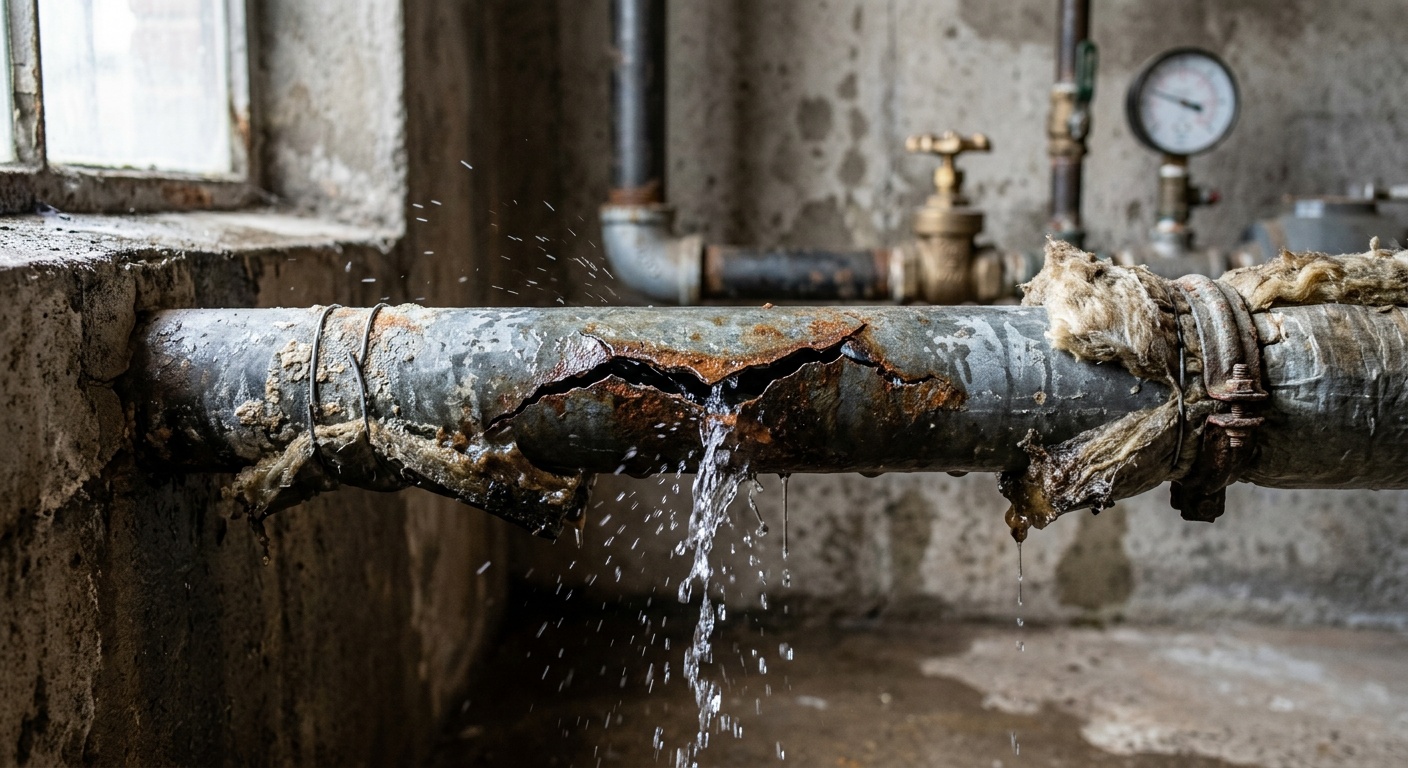
Ask any San Antonio plumber what their busiest summer call is, and the answer will almost universally be: slab leaks. A slab leak occurs when a pipe embedded in — or running beneath — your concrete foundation develops a breach. Water escapes under pressure, erodes soil, and can eventually compromise your foundation integrity.
Why does this happen more in summer? Two interconnected reasons:
- Ground movement: San Antonio’s clay-heavy soil contracts dramatically during drought periods, then expands when monsoon rains arrive in August. This cyclical expansion and contraction exerts physical stress on embedded copper pipes, which eventually crack or separate at joints.
- Thermal expansion: Hot water pipes running through concrete slabs experience significant thermal expansion in summer. Over years, this repeated expansion and contraction fatigues the pipe material and any fittings or joints along the run.
Recognizing the Warning Signs Before It Gets Catastrophic
Slab leaks are insidious because they can run undetected for weeks. By the time you see obvious symptoms, significant damage may already have occurred. Watch for these early indicators during summer 2026:
- Hot spots on your floor — particularly on tile or hardwood — that appear randomly and persist
- The sound of running water when all fixtures are off, especially audible near walls or floors
- Sudden, unexplained drop in water pressure throughout the home
- Cracks appearing in walls or baseboards that weren’t there before (foundation movement from soil erosion)
- Mold or mildew smell near floors even without visible moisture
- Water meter spinning when all water is turned off at fixtures
Case Study — Northwest San Antonio, Summer 2025: A homeowner in the Helotes area noticed a warm patch on his ceramic tile floor in late June. He dismissed it as a sun-heated spot for three weeks. By the time he called a plumber, approximately 45,000 gallons of water had escaped beneath his slab, eroding enough soil to cause visible cracking in two interior walls. The repair — involving electronic leak detection, tunneling under the slab, and pipe rerouting — cost $8,400. Early intervention would have cost under $1,500.
Repair Options: What You Need to Know
Modern slab leak detection has advanced significantly by 2026. Licensed plumbers now use electronic amplification equipment, thermal imaging cameras, and ground-penetrating radar to pinpoint leaks without destructive exploratory digging. Once located, homeowners typically have three repair paths:
- Spot repair: Accessing the pipe at the leak point. Least expensive but only addresses the specific failure, not aging pipes elsewhere.
- Pipe rerouting: Running new pipe through walls and attic space, bypassing the slab entirely. More expensive upfront but eliminates future slab leak risk from that line.
- Epoxy pipe lining: A trenchless technology where liquid epoxy is fed through existing pipes, hardening to create a new pipe within the old one. Excellent for homes with extensive slab pipe networks.
Proactive Prevention Strategies Every Homeowner Should Implement
The difference between homeowners who spend summers enjoying their backyard and those who spend them arguing with insurance adjusters comes down to one thing: proactive maintenance. Here’s your actionable summer plumbing checklist for 2026:
Before Summer Peaks (May–June)
- Inspect and test all irrigation zones manually — address drips and misaligned heads immediately
- Flush your water heater tank to remove accumulated sediment from the previous year
- Check all toilet flappers — replace any that show discoloration or warping
- Inspect supply lines under sinks and behind toilets — if they’re more than 7 years old, replace them proactively
- Clean all showerhead aerators by soaking in white vinegar for 2-3 hours to dissolve mineral deposits
During Peak Heat (July–August)
- Monitor your water meter reading weekly — track baseline usage and flag any anomalies immediately
- Keep your water heater thermostat at 120°F — higher settings accelerate sediment deposits and scale formation
- Check outdoor hose bibs for slow drips after sustained heat waves
- If you notice any floor hot spots or unusual sounds, call a plumber immediately — don’t wait
After Monsoon Season Begins (Late August–September)
- Inspect your yard for new wet spots or sinkholes that could indicate underground pipe failures
- Check your foundation perimeter for new cracks after the first significant rainfall
- Run a full meter test after the ground rehydrates to catch any slab leaks triggered by soil expansion
Summer Plumbing Problem Comparison
| Problem | Likelihood in SA Summer | Avg. Repair Cost (2026) | DIY Possible? | Prevention Difficulty |
|---|---|---|---|---|
| Slab Leak | Very High | $1,500 – $10,000+ | No | Moderate |
| Water Heater Sediment | High | $150 – $1,200 | Partial | Easy |
| Irrigation Line Failure | High | $200 – $800 | Yes | Easy |
| Toilet Flapper Failure | Moderate | $10 – $150 | Yes | Very Easy |
| Hard Water Scale Buildup | Very High | $50 – $2,500 | Partial | Moderate |
San Antonio Summer Plumbing Risk Visualization
Relative risk level by problem type (scale of 0–100):
Frequently Asked Questions
How do I know if I have a slab leak and not just a high water bill from summer usage?
The meter test is your first diagnostic tool: turn off all water-using appliances and fixtures, then watch your meter for 30 minutes. If the dial moves, you have an active leak somewhere. To distinguish between a slab leak and a surface leak, inspect all visible supply lines, toilets, faucets, and hose connections first. If everything looks dry but the meter still moves, and especially if you notice warm floor spots, a distant water-running sound, or unexplained wall cracks, call a licensed plumber with electronic leak detection equipment immediately. Don’t wait — every day of delay multiplies damage and repair cost.
Is a water softener worth the investment for a San Antonio home in 2026?
For most San Antonio homeowners, yes — particularly if your home is more than 10 years old or if you’re already seeing signs of hard water damage like scale around faucets, frequent water heater issues, or reduced appliance performance. With San Antonio’s water hardness consistently rating among the highest of major Texas cities, a whole-house softener or salt-free conditioner pays for itself in extended appliance lifespans, reduced cleaning product usage, and lower energy bills from more efficient water heating. Get quotes from two or three licensed plumbers in 2026 — competition in the San Antonio water treatment market has driven installation prices down meaningfully compared to 2023.
What should I do first if I suspect a plumbing emergency during a summer heat wave?
First, locate and know your main water shutoff valve before an emergency happens — this is ideally something you do today, not during a crisis. In most San Antonio homes, the main shutoff is either near the water meter at the street (operated with a meter key) or inside the home near the water heater or utility closet. If you suspect an active leak, shut off the main valve immediately to stop water loss and prevent further damage. Then call a licensed, insured San Antonio plumber. In 2026, many San Antonio plumbers offer 24/7 emergency services — expect premium pricing for weekend and after-hours calls, but weigh that against the cost of water damage that compounds hourly.
Your Summer Plumbing Survival Roadmap
Here’s the bottom line: San Antonio’s summer is not plumbing-neutral. It is actively hostile to unprotected, unmaintained plumbing systems. But the homeowners who treat their plumbing infrastructure with the same seasonal attention they give their HVAC system dramatically reduce their emergency exposure.
Here are your five immediate next steps — implement these now, and you’ll enter the hottest months of 2026 with genuine confidence:
- Do the meter test today. It takes 30 minutes and costs nothing. If the meter moves, you have actionable intelligence before a problem becomes a catastrophe.
- Flush your water heater this weekend. YouTube has clear tutorials, or hire a plumber for $75-$150. This single act can extend your water heater’s life by years and meaningfully cut energy costs.
- Walk your irrigation system zone by zone. Flag any wet spots, misaligned heads, or pressure anomalies. Fix drips before they become blowouts under July demand.
- Replace any supply lines older than 7 years. Under sinks and behind toilets, these braided lines are inexpensive insurance against sudden flooding — a common summer scenario.
- Call a plumber for a pre-season inspection if your home is over 15 years old. One hour of professional evaluation can catch developing slab issues, corroded valves, and sediment buildup before they escalate.
As climate patterns in South Texas continue their trend toward hotter, drier summers punctuated by intense storm events, the stresses on San Antonio’s residential plumbing infrastructure will only intensify. The homeowners who build proactive maintenance habits now are positioning themselves not just for a better summer in 2026, but for a more resilient home for decades to come.
The question isn’t whether your plumbing will face stress this summer — it will. The question is whether you’ll face that stress prepared or surprised. Which type of homeowner are you going to be?