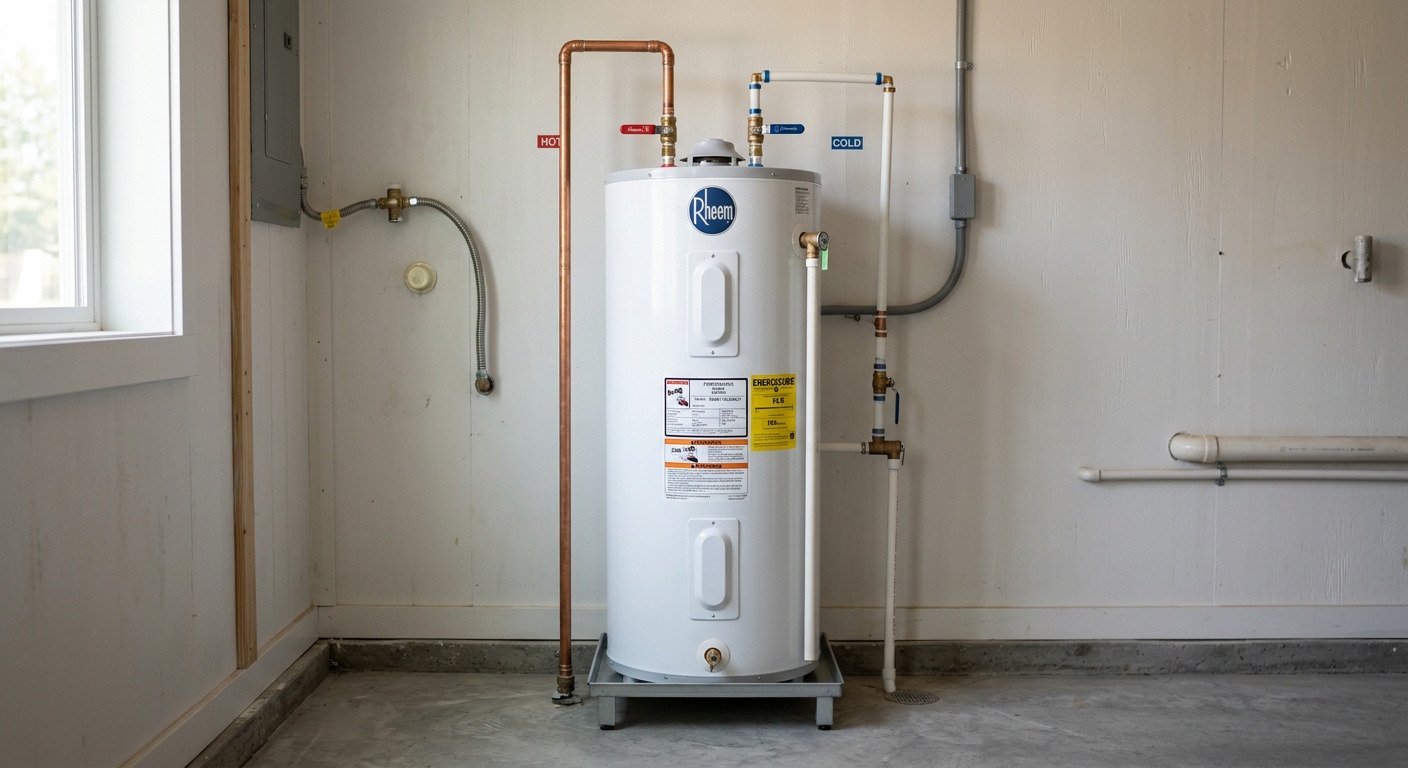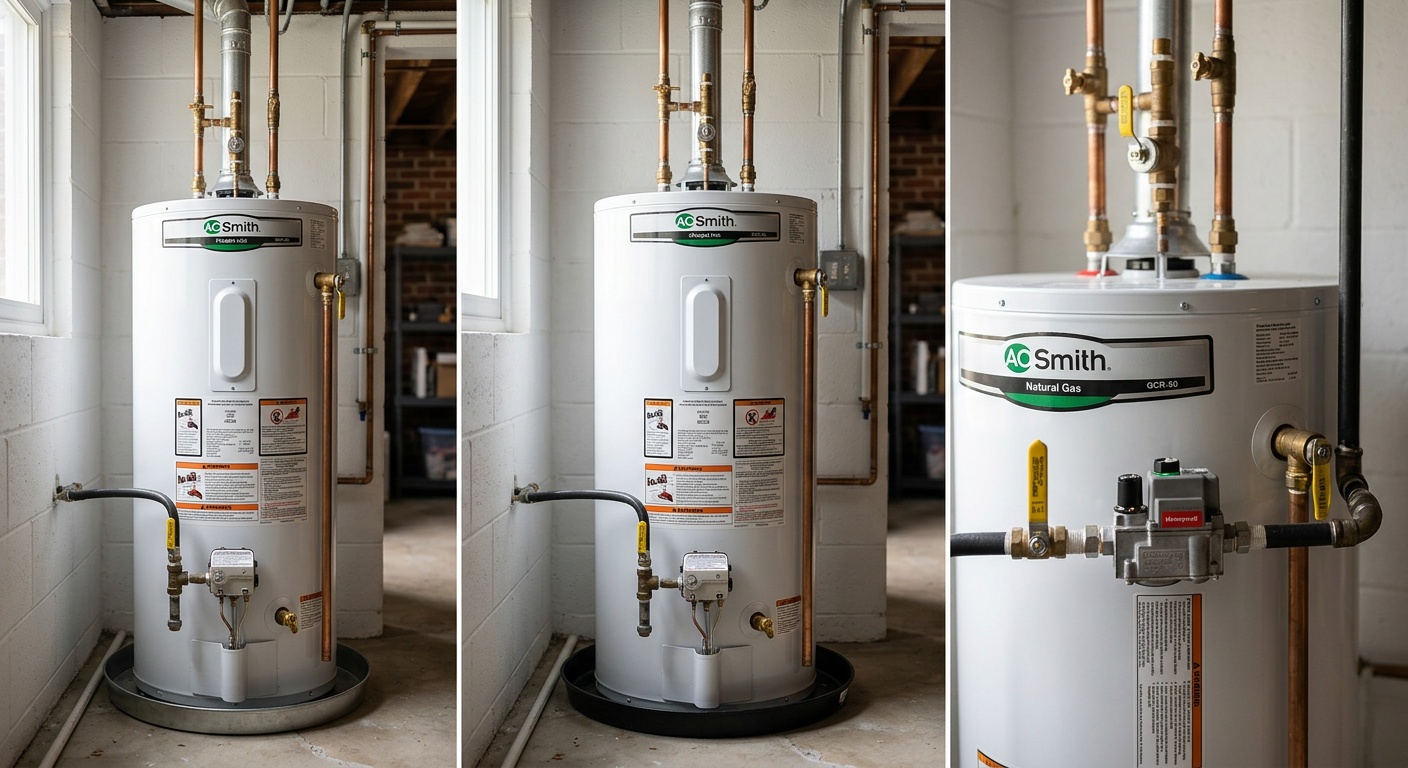
Water Heater Efficiency Tips for Hot Texas Climates
Reading time: 12 minutes
Living in Texas means you’ve signed up for scorching summers, unpredictable energy bills, and a climate that tests every appliance in your home. Your water heater? It’s working harder than you think — and probably costing you more than it should.
Here’s the straight talk: most Texas homeowners overpay for hot water by 20–40% simply because their systems aren’t optimized for the state’s unique climate conditions. The good news? A few strategic adjustments can dramatically change that picture.
Whether you’re in Houston dealing with 95% humidity, in Austin sweating through 110°F summer days, or out in El Paso with hard mineral-heavy water, this guide is built specifically for you. Let’s turn your water heater from an energy drain into an efficiency machine.
Table of Contents
- Why Texas Is a Different Ballgame for Water Heaters
- Choosing the Right Water Heater Type for Texas
- Dialing In Your Efficiency Settings
- Maintenance Routines That Pay Off
- Texas Water Heater Energy Use: A Quick Look
- Water Heater Type Comparison Table
- Real Texas Households: What’s Working in 2026
- Overcoming the 3 Biggest Texas-Specific Challenges
- Frequently Asked Questions
- Your Hot Water Efficiency Roadmap: Next Steps
Why Texas Is a Different Ballgame for Water Heaters
Most energy-efficiency guides are written with a generic American household in mind — somewhere with cold winters and mild summers. Texas breaks that mold entirely. The state’s climate, geography, and water quality create a very specific set of challenges that demand a tailored approach.
The Texas Climate Factor
Here’s something most homeowners don’t realize: your water heater’s efficiency is directly tied to the temperature of the incoming cold water supply. In colder northern states, groundwater temperatures sit around 40–50°F, meaning your heater works overtime to raise water to a usable temperature. In Texas, groundwater temperatures range from 68°F in the Panhandle to as high as 77°F in South Texas during summer months. That’s a head start — but it comes with its own complications.
The ambient temperature in your garage or utility closet (where most Texas water heaters live) can reach 100°F or higher during summer. For traditional tank water heaters, this is actually a benefit — the unit doesn’t need to work as hard to maintain water temperature. For heat pump water heaters, however, this ambient heat becomes a resource the system can actively harvest, making them exceptionally effective in Texas conditions. We’ll break this down further shortly.
According to the U.S. Energy Information Administration’s 2025 Residential Energy Consumption Survey, Texas households spend an average of $340–$480 annually on water heating — roughly 14–18% of their total energy bill. That’s higher than the national average, and it’s largely driven by household size, hard water mineral buildup, and inefficient system choices.
Hard Water: The Hidden Efficiency Killer
Texas is notorious for hard water. Cities like San Antonio, Austin, and Lubbock consistently rank among the top 10 hardest-water cities in the United States. Hard water contains elevated levels of calcium and magnesium, which deposit as scale inside your water heater’s tank and heating elements.
The impact is staggering. Just 1/4 inch of mineral scale buildup can reduce your water heater’s efficiency by up to 40%, according to a 2024 study published by the Water Quality Research Foundation. In Texas, where scale buildup can accumulate rapidly — sometimes within 12–18 months of installation without proper treatment — this is a critical issue that demands proactive attention.
Quick Scenario: Imagine you bought a brand-new 50-gallon gas water heater in 2024. By 2026, without any flushing or maintenance, you could already be experiencing meaningful scale accumulation — paying more every month for the same hot showers you were getting on day one. The heater isn’t broken. It’s just quietly becoming less efficient.
Choosing the Right Water Heater Type for Texas
Before optimizing what you have, it’s worth understanding whether your current water heater type is even the right tool for the Texas climate. In 2026, homeowners have more options than ever — and the gap in efficiency between different technologies has never been wider.
Heat Pump Water Heaters: Texas’s Secret Weapon
If you’re not already running a heat pump water heater (HPWH) and you live in Central, South, or East Texas, this is the single most impactful upgrade you can make. Here’s why: HPWHs work by pulling heat from the surrounding air and transferring it into the water, rather than generating heat directly. They’re 2–3 times more efficient than conventional electric resistance heaters.
In Texas’s hot climate, this efficiency advantage is amplified. A heat pump water heater installed in a warm garage in Houston operates at peak efficiency nearly year-round because it always has abundant ambient heat to harvest. The Coefficient of Performance (COP) — essentially the efficiency ratio — for a quality HPWH in a Texas climate can reach 3.5 to 4.0, meaning you get 3.5–4 units of heat energy for every 1 unit of electrical energy consumed.
In 2026, federal tax credits under the extended Inflation Reduction Act provisions still offer up to $600 in tax credits for qualifying heat pump water heaters, and many Texas utility companies — including Oncor, CenterPoint Energy, and Austin Energy — offer additional rebates ranging from $100 to $400. That means your upgrade investment can be offset significantly from the start.
Tankless (On-Demand) Water Heaters
Tankless water heaters have surged in popularity across Texas, particularly in newer construction in the Dallas-Fort Worth metroplex and Hill Country developments. They heat water only when needed, eliminating standby heat loss — which accounts for roughly 10–15% of a traditional tank heater’s energy consumption.
For Texas homeowners, gas-powered tankless units are particularly compelling. Natural gas prices in Texas remain among the lowest in the nation in 2026, and a high-efficiency condensing tankless unit rated at 0.92 Energy Factor or above can dramatically reduce operating costs. However, they require adequate gas line sizing and proper venting, which means professional installation is non-negotiable.
Traditional Tank Heaters: Making the Most of What You Have
Most Texas households still run conventional storage tank heaters, and that’s okay. If your unit is less than 8 years old and in good condition, the remaining sections of this guide will help you extract maximum efficiency from it. If it’s approaching 10–12 years, replacement planning should be on your radar — water heaters rarely fail gracefully, and an emergency replacement usually means less time to choose the most efficient option.
Dialing In Your Efficiency Settings
One of the fastest, zero-cost ways to improve efficiency is temperature optimization. Most water heaters ship from the factory set at 140°F. For the majority of Texas households, 120°F is the optimal temperature setting — it’s hot enough to prevent Legionella bacteria growth (which requires sustained temperatures below 122°F), while eliminating the significant energy waste of maintaining unnecessarily scalding water.
Dropping from 140°F to 120°F can reduce water heating costs by 6–10% annually, according to the Department of Energy’s 2025 Home Energy Guide. For a Texas household spending $400/year on water heating, that’s $24–$40 back in your pocket for doing nothing more than turning a dial.
Timer Controls and Smart Scheduling
Does your household follow a predictable schedule? Most do. Adults leave for work, kids head to school, and the house sits empty for 6–9 hours daily. During those hours, your water heater is quietly maintaining a tank of hot water that nobody is using — burning gas or electricity to compensate for standby heat loss.
Installing a water heater timer or upgrading to a Wi-Fi-enabled smart water heater allows you to schedule heating cycles around your family’s actual usage patterns. Set the heater to power down during the workday and ramp back up an hour before the evening routine begins. In Texas, where summer electricity rates under Time-of-Use (TOU) pricing structures peak between 2 PM and 8 PM, smart scheduling can also help you avoid expensive peak-rate electricity consumption.
Many Texas utilities now offer demand response programs where your smart water heater can participate in grid management events — and you earn bill credits in exchange. Austin Energy’s Connected Customer program, for instance, paid participating households an average of $45–$80 in credits during 2025’s peak summer season.
Insulation Upgrades for the Texas Context
Water heater insulation blankets were more commonly recommended 15–20 years ago when tanks were manufactured with minimal built-in insulation. Modern units typically have adequate foam insulation. However, if your tank is older or in a location that experiences temperature swings (like an uninsulated garage that drops to 45°F in a January cold snap), an insulation blanket can still provide meaningful savings.
More impactful for most Texas homeowners: insulating the first 6 feet of hot water pipes leaving the heater. This reduces heat loss in transit and means you get hot water faster at the faucet — reducing the amount of cold water you run down the drain while waiting. Pre-slit foam pipe insulation from any hardware store costs under $30 for a typical installation and takes under an hour to apply.
Maintenance Routines That Pay Off
Efficiency isn’t a set-it-and-forget-it achievement. It’s maintained through consistent, strategic upkeep. For Texas water heaters especially, a twice-yearly maintenance routine can extend system life by 3–5 years and preserve performance between those milestones.
Flushing Your Tank: The Non-Negotiable Step
Given Texas’s hard water conditions, tank flushing should happen at least once per year — twice per year if you’re in Austin, San Antonio, or the Permian Basin where water hardness regularly exceeds 400 mg/L (extremely hard). The process removes sediment and mineral buildup from the tank floor, where it accumulates and insulates the heating element from the water above it, forcing your system to burn more energy.
How to flush your tank water heater:
- Turn the thermostat to “Pilot” or shut off the gas/electricity
- Connect a garden hose to the drain valve at the tank’s base
- Open a hot water faucet somewhere in the house to prevent a vacuum
- Open the drain valve and let the tank empty completely
- Briefly open the cold water supply to flush remaining sediment
- Close the drain valve, refill, and restore power
The first time you flush an older Texas water heater, you may be surprised — or alarmed — by the amount of rust-colored, sediment-laden water that flows out. That sediment was sitting between your heating element and your water, acting as a thermal barrier. Its removal is immediately beneficial.
Anode Rod Inspection and Replacement
The sacrificial anode rod is the unsung hero of water heater longevity. This magnesium or aluminum rod suspended inside your tank corrodes preferentially, protecting the steel tank walls from rust. In Texas’s hard water environment, anode rods can deplete faster than the manufacturer’s expected timeline — sometimes within 3–4 years instead of the standard 5–6.
Inspect your anode rod every 2–3 years. If it’s worn down to less than 1/2 inch in diameter or heavily coated with calcium deposits, replace it. A new anode rod costs $20–$50 and takes about 30 minutes to swap. Neglecting it often means a rusted-out tank requiring a full replacement costing $800–$2,000+.
Texas Water Heater Energy Use: A Quick Look
The chart below compares average annual energy costs by water heater type for a typical Texas family of four in 2026, based on current statewide average utility rates.
Annual Water Heating Cost by System Type — Texas (2026)
*Based on 2026 average TX electricity rate of $0.134/kWh and natural gas at $1.18/therm. Family of four, 65 gallons/day average usage.
Water Heater Type Comparison Table
| Type | Efficiency Rating | Avg. Install Cost (TX) | Best For | Texas Climate Fit |
|---|---|---|---|---|
| Electric Resistance Tank | EF 0.90–0.95 | $600–$1,100 | Budget-conscious buyers | ⭐⭐ Fair |
| Natural Gas Tank | EF 0.58–0.70 | $700–$1,300 | Homes with gas lines | ⭐⭐⭐ Good |
| Gas Tankless | EF 0.82–0.95 | $1,200–$2,500 | High-demand households | ⭐⭐⭐⭐ Very Good |
| Heat Pump (HPWH) | UEF 3.5–4.0 | $1,400–$2,800 | Maximum efficiency | ⭐⭐⭐⭐⭐ Excellent |
| Solar w/ Backup | Solar Fraction 0.60–0.80 | $2,500–$5,000 | Long-term investment | ⭐⭐⭐⭐⭐ Excellent |
Real Texas Households: What’s Working in 2026
Case Study 1: The Garza Family in San Antonio
The Garza family — two adults, three teenagers, a sprawling 2,400 sq ft home in the Alamo Ranch neighborhood — were spending nearly $58/month on water heating alone with a 10-year-old 50-gallon electric resistance tank heater. Their SAWS (San Antonio Water System) water report classified their supply at 425 mg/L hardness — solidly in the “very hard” category.
In early 2025, they made three changes: replaced the old tank with a Rheem ProTerra 65-gallon heat pump water heater, installed a whole-house water softener, and added pipe insulation to the first 8 feet of hot water lines. By summer 2025, their monthly water heating cost had dropped to $19. Over twelve months, the savings totaled nearly $468 — and they’re on track to fully recoup their installation investment within 4 years, even before accounting for the $600 federal tax credit they claimed.
Case Study 2: Marcus and Deja Thompson in Austin
Marcus and Deja are a two-person household in Austin’s East Side with a newer 2018-built home that came with a mid-range gas tankless water heater. Their system was performing reasonably well — but they noticed their morning showers required a frustrating 45-second wait for hot water despite the tankless system’s theoretical instant-heat capability.
A plumber’s inspection revealed two issues: scale buildup in the heat exchanger (reducing flow efficiency) and undersized gas supply lines creating inconsistent burner performance. After a professional descaling service ($180) and a gas line upgrade ($320), their wait time dropped to under 10 seconds and they noticed a visible reduction in their monthly gas bill. The lesson: even efficient systems need maintenance, and diagnosing the real problem beats replacing equipment prematurely.
Overcoming the 3 Biggest Texas-Specific Challenges
Challenge 1: Winter Freeze Events
February 2021’s Winter Storm Uri was a brutal teacher for Texas. Millions of households discovered that their water heaters — and the pipes connected to them — weren’t designed for sustained sub-freezing temperatures. With climate scientists projecting continued weather volatility, freeze protection is now a real consideration even in Houston and San Antonio.
For tankless water heaters specifically, most modern units include built-in freeze protection down to 0°F — but the pipes feeding them do not. Insulating exposed pipes in garages, attics, and exterior walls with foam insulation is essential. For tank heaters in unconditioned spaces, a water heater insulation blanket adds a thermal buffer during cold snaps. Installing an automatic freeze protection valve ($15–$30) on exterior-facing lines adds another layer of security.
Challenge 2: High Demand During Peak Summer
Summer in Texas means more showers, more laundry, and more dishwashing — often with multiple family members home simultaneously. Traditional tank heaters can struggle to keep up during these peak demand windows, running out of hot water and recovering slowly.
Practical fixes include: setting your thermostat slightly higher (125°F instead of 120°F) during summer months to increase the effective stored capacity, staggering high-hot-water activities across the day, and — if budget allows — upgrading to a larger capacity unit or adding a secondary point-of-use heater near the primary demand area.
Challenge 3: Aging Infrastructure in Older Texas Homes
Many older Texas homes — particularly in inner-loop Houston neighborhoods, central Dallas, and historic San Antonio districts — have aging galvanized steel or polybutylene plumbing that interacts poorly with hard water and older water heaters. Scaling in pipes, not just in the heater, can reduce flow rates and amplify the appearance of water heater underperformance.
If you’ve optimized your heater but still struggle with hot water pressure or temperature consistency, have a plumber scope your distribution pipes before assuming the heater is the culprit. In many cases, targeted pipe replacement in high-scale-accumulation sections resolves the issue more cost-effectively than replacing the heater itself.
Frequently Asked Questions
What temperature should I set my water heater to in Texas?
For most Texas households, 120°F is the ideal setting. It’s hot enough to kill harmful bacteria like Legionella, comfortable for all household uses, and meaningfully more efficient than the factory-default 140°F setting. If you have a dishwasher without its own internal heater, check the manufacturer’s recommendation — some older models require 130°F water from the tap to sanitize effectively. Households with elderly members or young children particularly benefit from the 120°F setting, as it also reduces scalding risk.
Are heat pump water heaters worth the higher upfront cost in Texas?
Absolutely — and the math is increasingly compelling in 2026. A heat pump water heater in Texas typically achieves payback within 3–5 years compared to an electric resistance tank, and within 5–7 years compared to a gas tank, depending on utility rates and usage patterns. Factor in the $600 federal tax credit, available utility rebates, and Texas’s warm climate (which maximizes HPWH performance year-round), and the financial case is strong. If you’re replacing a failed electric water heater and have a warm utility space of at least 700 cubic feet available, a heat pump water heater should be your first consideration.
How often should I flush my water heater in Texas?
Given Texas’s hard water conditions, once per year is the minimum — twice per year is strongly recommended for households in high-hardness areas like San Antonio, Austin, and Lubbock. Areas with hardness levels above 300 mg/L will experience accelerated sediment buildup that undermines efficiency more rapidly than annual flushing alone can counter. Consider pairing annual flushing with a whole-house water softener or an in-line descaling filter on the cold water inlet to your heater. This combination dramatically extends tank life and sustains efficiency between service intervals.
Your Hot Water Efficiency Roadmap: Making Every Drop Count
You now have a comprehensive, Texas-specific playbook for water heater efficiency. The opportunities are real, the savings are measurable, and the tools to act are within reach. Here’s your actionable path forward:
- This week: Check and adjust your thermostat to 120°F. Inspect your anode rod if your heater is 3+ years old. Install pipe insulation on hot water lines leaving the heater.
- This month: Flush your tank to remove sediment buildup. Look up your utility company’s rebate programs for efficient water heaters — you may find incentives you didn’t know existed.
- This season: Evaluate whether your current system is the right technology for your household. If it’s over 8 years old or an electric resistance tank, begin pricing heat pump water heater options and factor in the federal tax credit.
- This year: If you’re in a high-hardness water area, seriously consider a water softener installation. The ROI extends well beyond your water heater to every appliance and fixture in your home.
- Long-term: Explore solar water heating as part of a broader home energy strategy — especially if you’re already considering rooftop solar, since thermal and photovoltaic systems can be designed to complement each other beautifully in Texas’s abundant sunshine.
The broader context here matters: Texas’s energy grid continues to evolve rapidly in 2026, with renewable capacity expanding and Time-of-Use pricing becoming more widespread. Water heaters that can respond intelligently to grid signals — pre-heating during low-rate hours, pausing during demand peaks — are becoming genuine grid assets, not just household appliances. The homeowners who position themselves now to take advantage of smart, efficient water heating technology will find themselves well ahead of rising energy costs and increasingly complex utility rate structures.
So here’s the question worth sitting with: Is your water heater working for you — or are you working for it? The answer, in most Texas homes, is closer to the latter than it should be. That’s a problem entirely within your power to solve, starting today.