How to Spot Hidden Slab Leaks Under Texas Foundations
Reading time: 14 minutes
There’s a slow, silent disaster unfolding beneath thousands of Texas homes right now — and most homeowners have absolutely no idea it’s happening. Hidden slab leaks are one of the most insidious threats to residential properties across the Lone Star State, quietly eroding foundations, spiking water bills, and cultivating the kind of structural damage that can cost tens of thousands of dollars to repair.
If you’ve ever noticed a warm spot on your tile floor, heard the faint sound of running water when every faucet is off, or watched your utility bill climb without explanation, you may already be living above a slab leak. The challenge? Texas’s unique geological conditions — expansive clay soils, extreme temperature swings, and aging pipe infrastructure — make slab leaks significantly more common here than in most other states.
Well, here’s the straight talk: spotting a slab leak early isn’t just about saving money — it’s about protecting the structural integrity of your entire home. Let’s break down exactly what you need to know, what signs to watch for, and how to take decisive action before a hidden drip becomes a foundation catastrophe.
Table of Contents
- What Is a Slab Leak and Why Is Texas So Vulnerable?
- The 8 Warning Signs You Should Never Ignore
- Professional Detection Methods Used in 2026
- How Texas Soil and Climate Accelerate Slab Leaks
- Cost Comparison: Early Detection vs. Delayed Repair
- DIY Checks You Can Do This Weekend
- Real Texas Case Studies: Lessons Learned
- Frequently Asked Questions
- Your Slab Leak Defense Roadmap
What Is a Slab Leak and Why Is Texas So Vulnerable?
A slab leak occurs when water or sewer pipes embedded within or beneath a concrete foundation develop a breach — whether from a pinhole, a crack, or a full pipe failure. Because these pipes are encased in concrete, often 4 to 6 inches deep, the leak is completely invisible to the naked eye until secondary damage begins to surface.
In Texas, the problem is particularly acute for several compounding reasons. According to the Texas Water Development Board’s 2025 Infrastructure Report, approximately 38% of Texas homes built before 1985 feature copper or galvanized steel pipes beneath their slab foundations — materials that have long surpassed their optimal service lifespan. As of 2026, the Texas Real Estate Commission has noted slab leak disclosures as one of the top five issues flagged in residential property inspections statewide.
Unlike pier-and-beam foundations common in other regions, Texas slab foundations place all plumbing directly in contact with the soil. When that soil shifts — and in Texas, it absolutely does — pipes bend, abrade, and eventually fail. The result is water infiltrating the very structure designed to hold your home in place.
The Anatomy of a Slab Leak
Understanding where leaks originate helps you respond faster. Slab leaks typically fall into two categories:
- Supply line leaks: These involve pressurized water lines feeding into your home. Because they’re under constant pressure, they tend to be more immediately damaging — water flows continuously until the leak is addressed.
- Drain line leaks: These involve wastewater pipes exiting your home. Slower and harder to detect initially, drain leaks can saturate soil and compromise the load-bearing capacity of your foundation over months or years.
Quick Scenario: Imagine you’ve just bought a 1978 ranch-style home in Plano. The inspector gave it a clean bill of health. But three months in, you notice the ceramic tiles in your kitchen seem slightly warmer than the rest of the floor. You shrug it off — until your water bill jumps $120 in a single month. That sequence of events is one of the most common slab leak narratives in North Texas.
The 8 Warning Signs You Should Never Ignore
Most slab leaks announce themselves through indirect clues long before visible damage appears. Training yourself to recognize these signals can mean the difference between a $2,500 repair and a $35,000 foundation overhaul.
Physical and Sensory Signals Inside Your Home
1. Unexplained Warm or Hot Spots on Flooring
This is one of the most classic indicators of a hot water line leak beneath your slab. If you’re walking barefoot across your tile or hardwood and notice a distinctly warm patch that doesn’t correspond to sunlight or HVAC vents, take note of exactly where it is and how large the area feels.
2. The Sound of Running Water When Nothing Is On
Turn off every water-using appliance in your home — dishwasher, washing machine, ice maker, irrigation system — then stand quietly in different rooms. A faint hissing, trickling, or whooshing sound emanating from the floor is a strong indicator of pressurized pipe leakage below.
3. Flooring That Buckles, Warps, or Separates
Moisture migrating up through your slab will attack whatever flooring material sits above it. Hardwood will cup and buckle. Laminate will swell at the seams. Even tile grout can crack and shift as the substrate beneath it becomes waterlogged and unstable.
4. Visible Cracks in Walls or Flooring
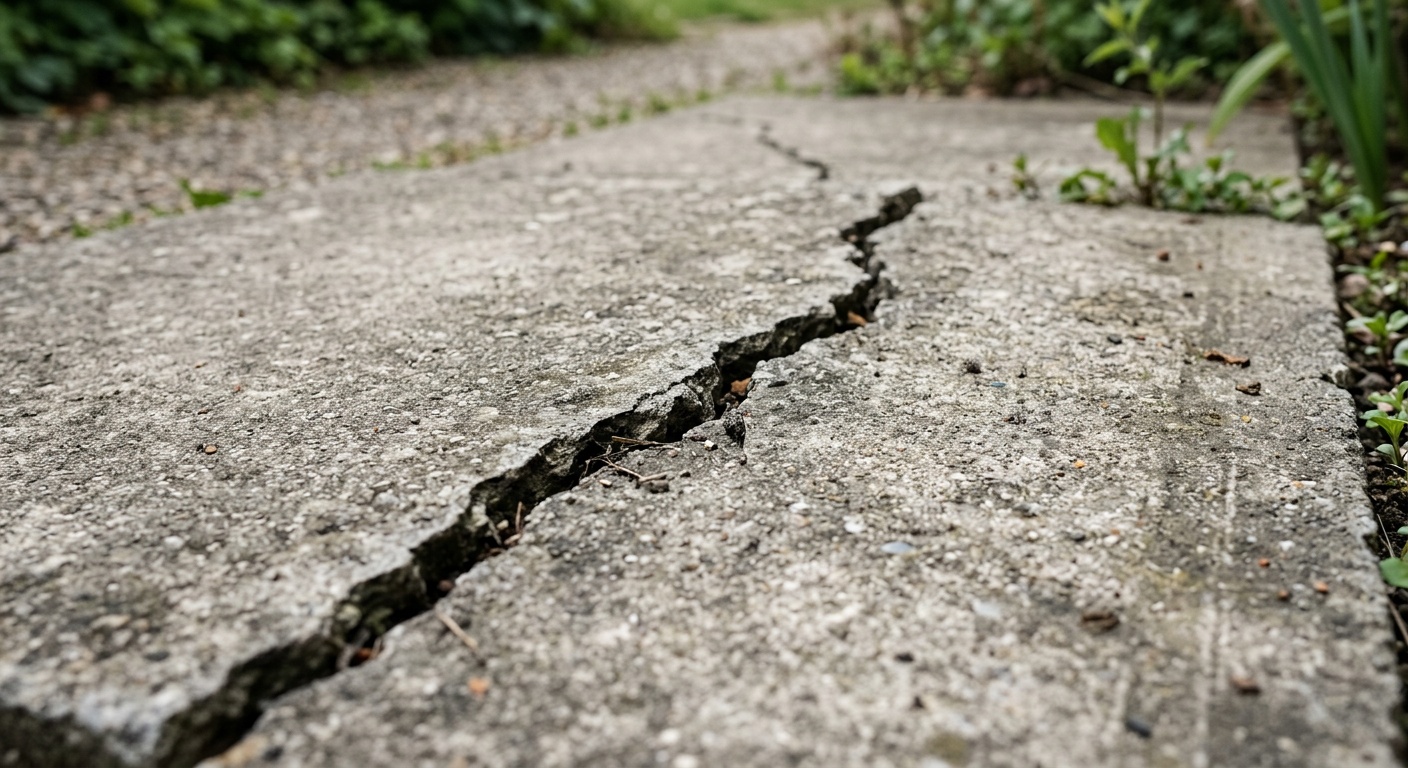
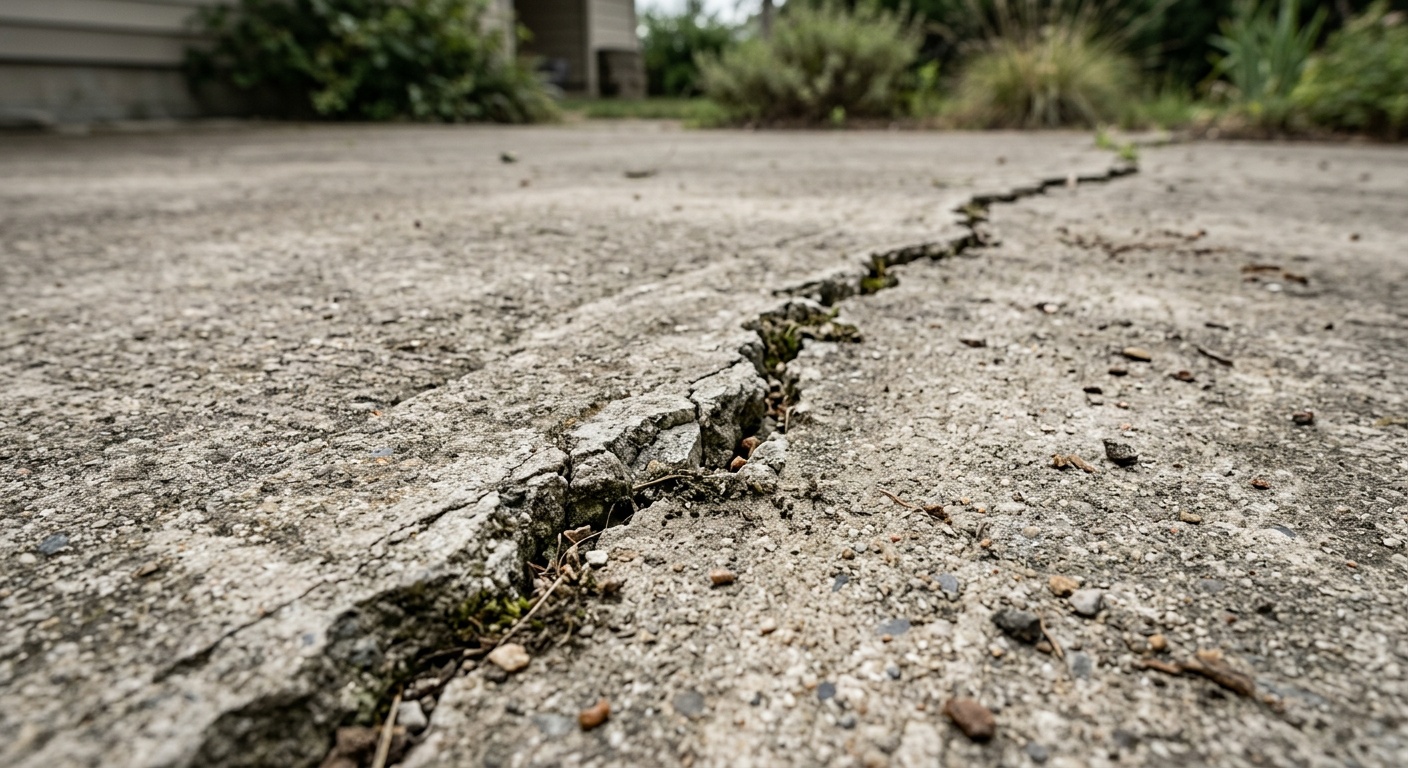
While hairline settling cracks are common in Texas homes, new cracks that appear suddenly — especially diagonal cracks running from window or door corners — may indicate that your foundation is shifting due to soil saturation from a leak below.
5. Mold, Mildew, or Musty Odors
Persistent musty smells in rooms with no obvious moisture source, particularly at floor level, suggest that water is wicking upward through your concrete. Mold can develop within 24 to 48 hours in the right conditions, and a slab leak provides exactly the sustained moisture mold thrives on.
Utility and Exterior Warning Signs
6. Sudden Unexplained Spikes in Your Water Bill
The average Texas household uses approximately 5,800 gallons of water per month, according to 2025 data from the Texas Commission on Environmental Quality. If your bill jumps significantly without a corresponding change in usage — no new irrigation, no houseguests, no pool filling — a supply line leak should be your first hypothesis.
7. Low Water Pressure Throughout the House
When water that should be flowing to your fixtures is instead escaping through a breach in your slab, overall pressure drops. If multiple fixtures suddenly seem weak, it’s worth investigating beyond just your water heater or pressure regulator.
8. Soft, Damp, or Unusually Green Patches in Your Yard
A slab leak doesn’t always stay under the house. Water can migrate through the soil and emerge in your yard, creating patches of lush, unnaturally green grass or persistently soft, muddy ground — even during dry Texas summers.
Professional Detection Methods Used in 2026
The technology available to licensed plumbers and leak detection specialists in 2026 has advanced dramatically from the pipe-banging methods of the past. Today’s detection is precise, non-invasive, and can pinpoint a leak to within inches before a single tile is removed.
Advanced Detection Technologies
Electronic Leak Detection (ELD): Specialists use sensitive electronic listening devices that amplify the sound of water escaping under pressure through concrete. Modern ELD equipment in 2026 uses AI-assisted signal filtering to reduce false positives from ambient noise — a significant improvement over earlier-generation tools.
Infrared Thermal Imaging: Thermal cameras detect temperature differentials on your floor’s surface. A hot water supply leak appears as a warm anomaly; a cold water leak shows as a cooler zone. This method is fast, non-destructive, and particularly effective in single-story homes.
Helium Tracer Gas Testing: For drain lines and supply lines that aren’t under pressure, technicians inject inert helium gas into the pipe system. Because helium molecules are exceptionally small, they permeate through cracks and emerge at the surface where sensitive detectors pick up the trace — revealing the exact leak location.
Ground Penetrating Radar (GPR): Increasingly common among high-end leak detection services in Texas as of 2026, GPR uses radar pulses to map subsurface voids, moisture pockets, and pipe locations. It’s particularly valuable for identifying the scope of soil erosion caused by long-running leaks.
Pro Tip: Always request that your leak detection specialist provide a written report with the leak location coordinates relative to a fixed reference point in your home. This documentation is critical for your plumber, your insurance claim, and any future property disclosures.
How Texas Soil and Climate Accelerate Slab Leaks
Texas isn’t just a challenging environment for plumbing — it’s practically designed to stress-test it. Three key factors make the state an unusually high-risk zone for slab leaks.
Expansive Clay Soil (Shrink-Swell Behavior): Much of North, Central, and East Texas sits on highly expansive clay soils that absorb water and swell dramatically, then contract and crack when they dry. The Texas A&M AgriLife Extension Service estimates that 60% of Texas’s residential land area is underlain by clay soils with moderate to high expansion potential. Every wet-dry cycle exerts lateral and vertical pressure on your foundation pipes, gradually wearing through pipe walls and joints.
Extreme Temperature Cycling: Texas experiences dramatic temperature swings — not just seasonally, but within single weeks. The February 2021 winter storm Uri caused an estimated 12 million pipe failures statewide, according to the Texas Division of Emergency Management. In 2025, similar cold snap events continued to stress aging plumbing infrastructure, and in 2026, insurance claims related to freeze-induced slab leaks remain elevated across Dallas-Fort Worth and the Hill Country.
Drought-Flood Cycles: Texas’s oscillation between severe drought and intense rainfall creates a cycle of soil dessication followed by rapid saturation. When dry, cracked soil suddenly absorbs heavy rain, it shifts rapidly — and any pipes resting in that soil shift with it. The USGS 2025 Texas Drought Monitor data confirmed that 47% of the state experienced at least one severe drought period in 2025, followed by above-normal precipitation events.
Cost Comparison: Early Detection vs. Delayed Repair
The financial case for early action is overwhelming. Here’s a comparative breakdown of typical costs across different stages of slab leak response in Texas as of 2026:
| Repair Stage | Typical Texas Cost (2026) | Structural Risk | Timeline to Address |
|---|---|---|---|
| Professional Leak Detection Only | $300 – $700 | None yet | Same day |
| Early-Stage Pipe Repair (localized) | $1,500 – $4,000 | Minimal | 1–2 days |
| Moderate Damage + Pipe Re-Routing | $6,000 – $15,000 | Moderate — floor and wall repairs needed | 3–7 days |
| Severe Leak + Foundation Repair | $20,000 – $65,000 | High — potential total loss of flooring, framing | 2–6 weeks |
| Whole-House Repipe (prevention/replacement) | $8,000 – $18,000 | Preventative | 3–5 days |
Detection Speed: How Quickly Are Texas Homeowners Acting?
Average Time Before Homeowners Investigate Slab Leak Symptoms (Texas 2025–2026 Survey Data)
Source: Texas Plumbing Contractors Association survey, 2025–2026 sample of 1,400 homeowners
DIY Checks You Can Do This Weekend
You don’t need specialized equipment to perform a meaningful preliminary assessment. These are practical checks any Texas homeowner can execute today.
The Water Meter Test (Most Reliable DIY Method)
This is the single most effective DIY diagnostic for a supply line leak:
- Shut off all water-using appliances and fixtures in your home completely. Include your ice maker, irrigation controller, and any smart home water features.
- Locate your water meter — usually near the street, inside a concrete box with a metal lid.
- Note the exact reading on the meter dial, including the small triangular flow indicator (present on most Texas municipal meters).
- Wait 30–60 minutes without using any water.
- Return and check the meter. If the flow indicator is spinning or the reading has changed, water is leaving your system somewhere it shouldn’t be.
Pro Tip: Perform this test during both day and night. Automatic irrigation systems or slow drippers can complicate daytime readings. The most reliable window is between midnight and 5 AM.
The Floor Temperature Walk
On a cool morning, walk barefoot through every room of your home in a systematic grid pattern. Pay particular attention to areas near bathrooms, kitchens, and laundry rooms where supply lines are most concentrated. Mark any consistently warm patches with painter’s tape — they’re worth documenting even if the difference seems subtle.
Shut-Off Valve Pressure Test
If you have access to your home’s main shutoff and individual fixture shutoffs, a plumber can isolate different sections of pipe to determine which zone is losing pressure. While this is easier to execute with professional equipment, understanding the concept helps you communicate effectively when you call for service.
Real Texas Case Studies: Lessons Learned
Case Study 1: The Austin Home with $47,000 in Hidden Damage (2025)
A homeowner in the Mueller neighborhood of Austin noticed slightly elevated water bills starting in March 2025 — about $40 more per month than usual. She attributed it to seasonal irrigation and ignored the signal for nearly eight months. By November 2025, her hardwood floors in the living room had buckled dramatically, mold was discovered inside three interior walls, and a foundation inspection revealed significant soil erosion beneath the northeast corner of the slab. The final repair bill — including pipe repair, foundation pier installation, floor replacement, and mold remediation — totaled $47,200. Her homeowner’s insurance covered only $11,000 due to a clause about neglected maintenance. Had she investigated in April, the estimated repair cost would have been under $3,800.
Case Study 2: The San Antonio Family Who Caught It Early (2026)
In contrast, a family in San Antonio’s Stone Oak neighborhood noticed the faint sound of running water in their master bedroom wall in January 2026. Rather than dismiss it, they performed the water meter test, confirmed movement in their meter overnight, and called a licensed leak detection company within the week. The thermal imaging scan located a pinhole leak in a hot water supply line 14 inches beneath the bathroom floor. Total cost: $480 for detection, $2,100 for repair, and $350 for tile replacement. Total downtime: two days. The family’s proactive response saved them an estimated $20,000+ in progressive damage.
Case Study 3: New Construction Isn’t Immune — A Frisco Story
A misconception many Texas homeowners hold is that newer construction is immune to slab leaks. A 2022-built home in Frisco developed a slab leak by late 2024 — just two years after move-in. The culprit was construction-phase pipe damage: a small crimp in a PEX supply line caused by improper concrete poring technique. The leak was slow but persistent, and because the homeowners didn’t expect issues in a new home, it went undetected until 2025 when discoloration appeared on the concrete garage floor. The builder’s warranty had lapsed, leaving the family with a $9,400 bill. Lesson: age of construction is not a reliable indicator of slab leak risk.
Frequently Asked Questions
How do I know if I have a slab leak or just a regular plumbing leak?
The key differentiator is location and persistence. A standard fixture leak — a dripping faucet, a running toilet, a loose pipe joint under a sink — can be traced visually and is typically intermittent or localized to one fixture. A slab leak, by contrast, produces symptoms across a broader area (warm floors, unexplained wet spots, whole-house pressure drops) and cannot be traced to any visible plumbing component. The water meter test described in this article is your most reliable at-home confirmation method. If your meter moves with all fixtures off, and you cannot identify any leaking fixtures or appliances, a slab leak is the most likely explanation.
Does homeowner’s insurance in Texas cover slab leaks?
Coverage varies significantly by policy and insurer. As of 2026, most standard Texas homeowner’s policies cover the resulting damage from a sudden, accidental slab leak — such as flooring replacement or wall mold remediation — but explicitly exclude the cost of accessing and repairing the pipe itself, which is considered a maintenance item. Some policies include a “limited water backup” or “service line” rider that extends coverage to pipe repair costs. Review your declarations page carefully and consider adding a service line endorsement if you own a home built before 1990. Always document symptoms with dated photographs before filing any claim.
How often should Texas homeowners proactively check for slab leaks?
Experts from the Texas State Board of Plumbing Examiners recommend that homeowners in high-risk areas — particularly those with clay soils, homes built before 1990, or properties that experienced the 2021 freeze — perform the water meter test seasonally, once every three months. A professional leak detection inspection is advisable every three to five years as a preventative measure, and immediately following any significant freeze event, extended drought, or flooding episode. Homes with a documented history of slab leaks should be inspected annually. The cost of a professional inspection ($300–$700) is trivial compared to the potential cost of undetected damage.
Your Slab Leak Defense Roadmap
You’ve now got the knowledge. The question is: what happens next? Here’s your practical, action-oriented roadmap for protecting your Texas foundation starting today.
Step 1 — Perform the Water Meter Test This Week. Take 30 minutes this weekend to run the meter test described above. It costs nothing and takes no special skill. If the meter moves, you’ve just potentially saved yourself thousands of dollars by catching a problem early.
Step 2 — Walk Your Home for Warning Signs. Do a systematic walk of every room looking for warm floor patches, new wall cracks, soft flooring, or musty smells. Check your water bill history for the past 12 months — most Texas utilities offer online usage dashboards. Flag any month where usage jumped more than 15% without explanation.
Step 3 — Research Licensed Leak Detection Specialists in Your Area. Don’t wait until you have an emergency. Identify two or three licensed, Texas-registered leak detection companies in your city now. Look for companies using thermal imaging and electronic listening equipment. Ask specifically whether they provide written reports with precise location data.
Step 4 — Review Your Insurance Policy. Pull out your homeowner’s policy declarations page and look for language around “water damage,” “service lines,” and “sudden and accidental” leaks. Call your agent to clarify what’s covered and whether a service line rider is available for your policy.
Step 5 — Set a Seasonal Reminder. Add a calendar reminder every three months for a quick water meter check. Annual reminders for a professional inspection make sense for homes with copper pipes, post-freeze exposure, or a history of foundation movement.
As Texas continues to grow — with the U.S. Census Bureau projecting the state’s population to exceed 34 million by 2027 — the demand on aging water infrastructure will only intensify. New construction expands rapidly, but so does the stock of homes entering their most vulnerable plumbing decades. Slab leak awareness isn’t just a homeowner’s issue; it’s becoming a statewide infrastructure conversation.
Your foundation is the most fundamental part of your home’s value and safety. The most powerful thing you can do right now — today — is simply look for the signs. Will you wait until water appears on your floor, or will you check your meter before you finish reading this article?